Anxiety can affect thoughts, emotions, physical well-being, and daily functioning. Many people experience persistent worry, overthinking, nervousness, or difficulty relaxing even when no immediate danger is present.
Hypnotherapy is sometimes used as a complementary approach to support relaxation and emotional well-being.
Understanding Anxiety Patterns
Anxiety often involves repetitive thought cycles that trigger emotional and physical stress responses.
Over time, the brain may become conditioned to react automatically to situations, memories, or future concerns.
Hypnotherapy seeks to help individuals recognize and interrupt these patterns.
How Hypnotherapy Works
During a hypnotherapy session, clients enter a deeply relaxed state of focused attention.
In this state, individuals may become more receptive to positive suggestions, emotional awareness exercises, and mindset-building techniques.
Potential Benefits for Anxiety Management
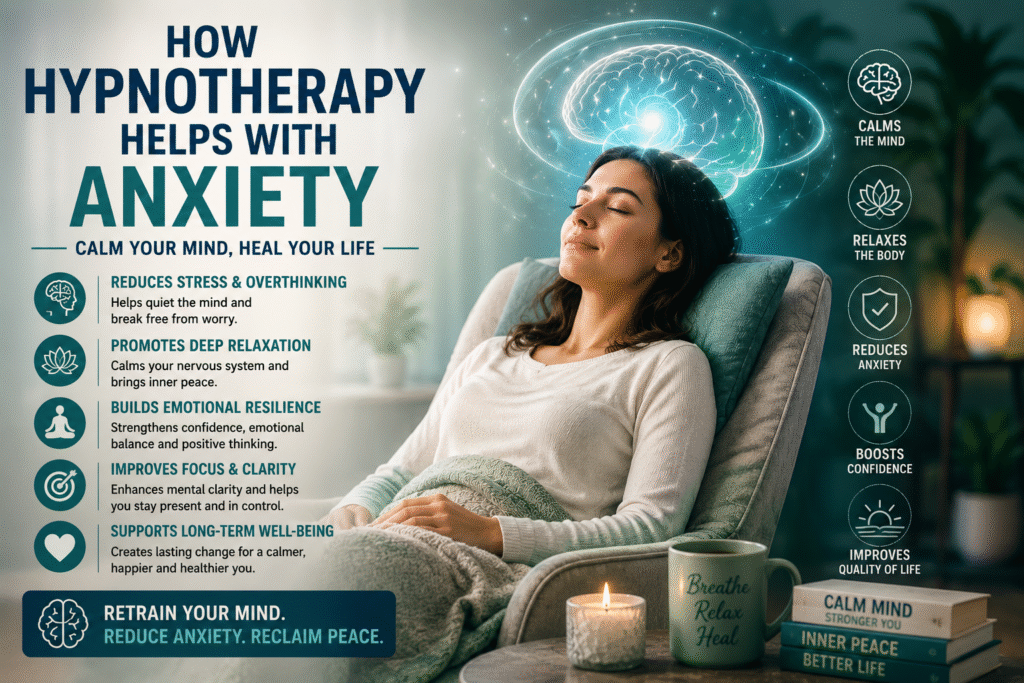
Hypnotherapy may help support:
- Relaxation skills
- Stress management
- Emotional regulation
- Positive thinking patterns
- Confidence building
- Mental clarity
Many clients report feeling calmer and more aware of their emotional responses after consistent practice.
Breaking the Cycle of Overthinking
Anxiety often feeds on repetitive mental loops.
Hypnotherapy may help individuals develop healthier internal dialogue and reduce the intensity of automatic worry-based thinking.
Supporting Overall Well-Being
Hypnotherapy is best viewed as part of a broader self-care strategy that may include professional mental health support, healthy routines, mindfulness practices, and stress-management techniques.
When combined with positive lifestyle changes, hypnotherapy can become a useful tool for improving emotional balance and mental resilience.