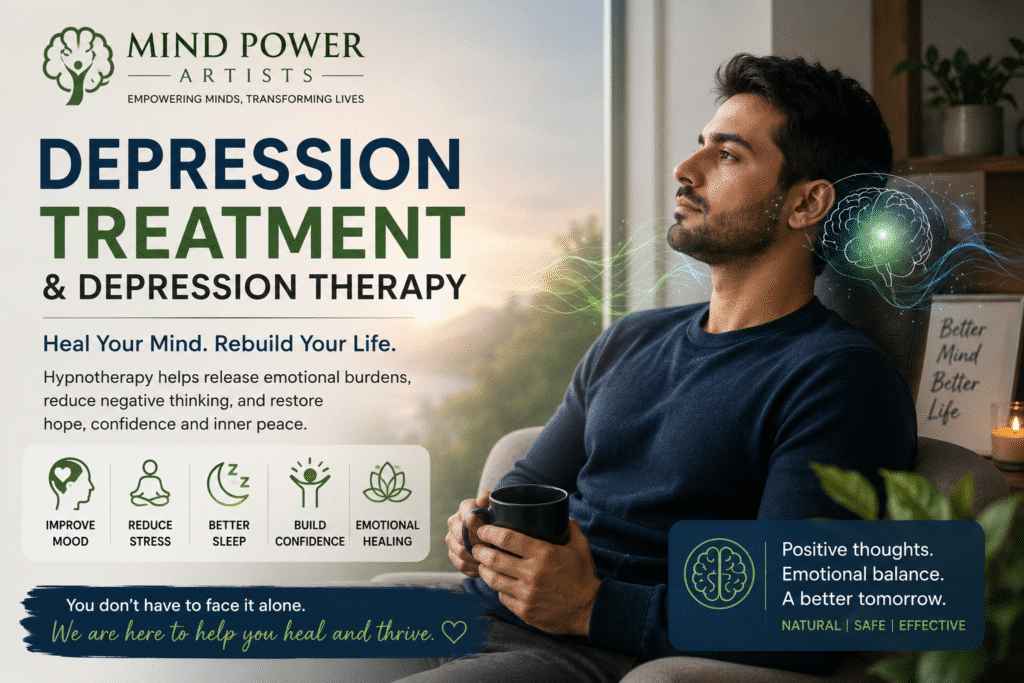
Depression is more than simply feeling sad or having a bad day. It is a serious mental health condition that can affect your thoughts, emotions, energy, relationships, and daily life. Many people struggle silently, believing that things will improve on their own, but depression often requires professional support.
At Mind Power Artists, we offer depression therapy using hypnotherapy as a complementary approach to help clients explore subconscious thought patterns, develop healthier emotional responses, and support their overall well-being. While hypnotherapy is not a replacement for medical or psychiatric care, it can be a valuable part of a broader treatment plan for some individuals.
If you’re looking to learn about depression treatment and how hypnotherapy may help, this guide will provide an overview.
What Is Depression?
Depression is a mental health condition characterized by persistent feelings of sadness, hopelessness, or a loss of interest in activities that were once enjoyable. Symptoms typically last for at least two weeks and can significantly affect daily functioning.
Depression can affect people of all ages and backgrounds. It is not a sign of weakness, and seeking help is an important step toward recovery.
Common Symptoms of Depression
Depression can present differently from person to person. Common symptoms include:
Emotional Symptoms
- Persistent sadness or emptiness
- Feeling hopeless
- Loss of motivation
- Irritability
- Feeling worthless or guilty
- Emotional numbness
Physical Symptoms
- Fatigue or low energy
- Changes in appetite or weight
- Difficulty sleeping or sleeping too much
- Frequent headaches or body aches
- Slower movement or speech
Mental Symptoms
- Difficulty concentrating
- Trouble making decisions
- Negative thinking
- Reduced confidence
- Feeling overwhelmed
If these symptoms persist or interfere with daily life, it’s important to seek help from a qualified healthcare or mental health professional.
What Causes Depression?
Depression often results from a combination of factors rather than a single cause.
These may include:
- Chronic stress
- Traumatic experiences
- Grief and loss
- Family history
- Major life changes
- Relationship difficulties
- Ongoing health conditions
- Chemical and biological factors affecting the brain
Understanding the underlying contributors can help guide effective treatment.
What Is Depression Treatment?
Depression treatment is personalized and may include one or more approaches depending on the individual’s needs.
Treatment options may include:
- Psychological therapies (such as cognitive behavioral therapy)
- Medication prescribed by a qualified physician or psychiatrist
- Lifestyle changes, including exercise and sleep improvement
- Stress management techniques
- Mindfulness and relaxation practices
- Complementary therapies, such as hypnotherapy
A healthcare professional can help determine the most appropriate treatment plan.
What Is Depression Therapy?
Depression therapy focuses on helping individuals understand their emotions, develop healthier coping strategies, and improve their quality of life.
Therapy may help you:
- Identify unhelpful thought patterns
- Build emotional resilience
- Improve self-esteem
- Process difficult emotions
- Develop healthier habits
- Strengthen coping skills
How Hypnotherapy May Support Depression Therapy
Hypnotherapy works with the subconscious mind through guided relaxation and focused attention. Some people find that it helps them become more aware of unhelpful emotional patterns and supports positive behavioral change.
As part of a broader care plan, hypnotherapy may help by:
Encouraging Deep Relaxation
Reducing stress and promoting a sense of calm.
Addressing Negative Thinking Patterns
Helping reinforce more balanced and constructive beliefs.
Supporting Emotional Healing
Creating space to process difficult emotions in a structured therapeutic setting.
Improving Sleep
Helping calm racing thoughts that may interfere with restful sleep.
Building Confidence
Supporting healthier self-belief and emotional resilience.
It’s important to note that results vary, and hypnotherapy should complement—not replace—evidence-based medical or psychological treatment when needed.
Benefits of Depression Therapy
With appropriate professional support, many people experience improvements such as:
- Better emotional well-being
- Improved sleep
- Increased motivation
- Better stress management
- Greater self-confidence
- Healthier relationships
- Improved focus
- Better work and daily functioning
- Renewed sense of purpose
What Happens During a Hypnotherapy Session?
At Mind Power Artists, sessions are personalized to your goals.
A typical session may include:
Initial Consultation
Discussing your concerns, goals, and current challenges.
Guided Relaxation
Helping you enter a calm and focused state.
Therapeutic Suggestions
Using evidence-informed techniques to encourage healthier emotional responses and thinking patterns.
Practical Strategies
Providing techniques that support ongoing emotional well-being between sessions.
Throughout the session, you remain aware and in control.
Is Hypnotherapy Safe?
Yes. When provided by a trained practitioner, hypnotherapy is generally considered safe as a complementary therapeutic approach.
However, if you have severe depression or symptoms such as thoughts of self-harm or suicide, immediate assessment by a qualified mental health professional or emergency services is essential.
Why Choose Mind Power Artists?
At Mind Power Artists, we provide a supportive and confidential environment where clients can work toward emotional well-being through personalized hypnotherapy.
Our approach focuses on:
- Individualized care
- Emotional resilience
- Stress reduction
- Confidence building
- Long-term personal growth
We work alongside—not in place of—appropriate medical and psychological care when needed.
Frequently Asked Questions
Can hypnotherapy cure depression?
Hypnotherapy is not considered a cure for depression. It may support emotional well-being and complement other treatments as part of a comprehensive care plan.
How many sessions will I need?
The number of sessions varies depending on your goals and circumstances.
Will I lose control during hypnosis?
No. You remain conscious, aware, and able to communicate throughout the session.
Can hypnotherapy help with stress and anxiety as well?
Many people use hypnotherapy as a complementary approach to help manage stress and anxiety, which may occur alongside depression.
Take the First Step Toward Emotional Well-Being
Recovery from depression is possible, and seeking support is a sign of strength.
If you’re looking for depression treatment or depression therapy as part of your journey toward better mental health, Mind Power Artists offers personalized hypnotherapy sessions designed to support emotional growth and resilience.
Book Your Consultation Today
🌐 Website: https://mindpowerartists.com/
📱 WhatsApp: +92 319 0155226
Let us help you take the next step toward a healthier, more balanced life.