
Introduction: Past Memories That Still Hurt
Many assume that past memories that still hurt fade on their own over time. The truth is, simply waiting rarely works. Painful experiences and unresolved emotions often linger quietly, affecting your daily life, thoughts, and decisions without you even realizing it.
A Relatable Scenario About Lingering Memories
Imagine running into a situation that triggers an old memory. Suddenly, feelings you thought were long gone resurface. Maybe it is a harsh word from a childhood incident, a failed relationship, or a moment of regret. These memories that still hurt can make you feel stuck, frustrated, or even anxious. You are not alone in this.
Why Addressing Past Emotional Pain Matters
Ignoring emotional scars from the past may seem easier, but it can affect your mental health, relationships, and overall well-being. Lingering memories keep your mind tied to old pain, making it harder to experience joy, trust others, or grow personally. Addressing these memories is essential for emotional freedom and long-term peace.
Moving Forward with Simple Steps
The good news is that you can take simple steps to cope and heal. From mindfulness practices to self-forgiveness, small actions can help you release emotional baggage. In this blog, you will learn how to recognize these lingering memories and practical ways to let go, so you can finally feel lighter and more present.
Understanding Past Memories That Still Hurt
What Are Past Memories That Still Hurt?
Past memories that still hurt are moments from your history that trigger emotional pain even after years have passed. These could be anything from childhood trauma, regrets, past heartbreaks, or moments of loss. They are memories that refuse to stay in the past and continue affecting your mood, self-esteem, and relationships.
Emotional and Psychological Impact
Unresolved memories can create ongoing emotional stress. You may feel anxious, sad, or irritable for no apparent reason. Emotional scars from the past can lead to self-doubt and difficulty trusting others. Even minor triggers can stir up old pain, making daily life feel heavier than it should.
Memories That Hurt
These memories that still hurt are closely linked to past emotional pain and lingering emotional scars. Understanding them is the first step toward healing. It is not just about remembering; it is about acknowledging how deeply these memories affect you mentally and emotionally.
Ignoring Memories Can Be Harmful
When old memories are pushed aside or suppressed, they do not disappear. Instead, they often influence your thoughts, decisions, and interactions subconsciously. Past emotional pain can manifest as stress, anxiety, or even unhealthy patterns in relationships. Recognizing and addressing these memories is key to regaining emotional balance and creating a more peaceful mindset.
Transitioning Toward Healing
Once you understand the nature of these painful memories, you can begin exploring techniques and strategies to release them. From therapy and journaling to mindfulness and self-compassion, actionable steps are available to help you cope with emotional baggage and prevent past memories from continuing to hurt your present.
Common Causes of Lingering Pain from the Past
It is a common misconception that painful memories fade away simply with time. Many assume that as we get older, past emotional pain naturally disappears. The truth is, unresolved trauma and emotional baggage often linger quietly, shaping how we think, feel, and react in daily life.
Childhood Trauma and Its Long-Term Effects
Childhood trauma is one of the most common causes of past memories that still hurt. Even small experiences like being ignored, scolded harshly, or bullied can leave emotional scars. These early wounds shape how we respond to stress, interact with others, and even view ourselves. Emotional baggage from childhood can stay hidden for years, resurfacing in adulthood as anxiety, self-doubt, or difficulty trusting others.
Past Relationship Pain and Heartbreak
Romantic or close relationship heartbreak often leaves lasting impressions. Breakups, betrayals, or unspoken conflicts create painful memories that can influence future connections. Coping with past trauma from relationships requires acknowledgment and self-care. Lingering memories of lost love can make it hard to open up again, yet recognizing their presence is the first step toward emotional freedom.
Regrets and Decisions That Still Haunt
Decisions we regret, missed opportunities, or mistakes we made can continue to hurt long after the moment has passed. These memories often trigger self-blame and second-guessing. Dwelling on regrets feeds unresolved trauma and prevents emotional healing. Learning to forgive yourself and accept past choices is essential to lighten the burden of lingering memories.
Emotional Wounds from Loss or Grief
Loss, whether from death, separation, or significant change, can create deep emotional scars. Grief can linger in subtle ways, influencing mood, relationships, and mental clarity. Painful memories tied to loss are natural, but unresolved grief can keep past emotional pain alive. Recognizing these memories as part of your journey helps in processing them rather than letting them control your present.
Understanding the Root of Lingering Memories
Identifying the causes of painful memories is a key step toward healing. Childhood trauma, heartbreak, regrets, and loss all contribute to emotional scars. Once you understand these sources, you can begin to develop coping strategies and release the emotional baggage that holds you back from peace and personal growth.
Signs That Your Past Memories Are Affecting Your Present
Many believe that past emotional pain only affects the past. The reality is that lingering memories often influence daily life in ways we barely notice. They can affect relationships, work, and even mental health if left unchecked.
Constantly Thinking About Old Events
If you catch yourself repeatedly revisiting old situations, you might be struggling with unresolved trauma. Memories that still hurt often pop up unexpectedly, keeping your mind tied to past pain instead of the present.
Feeling Emotional Triggers Without Warning
Sudden waves of sadness, anger, or anxiety often arise without a clear reason. These emotional triggers can be linked to past experiences you haven’t fully processed. Recognizing these moments helps in managing your reactions and breaking free from the grip of old memories.
Avoiding Certain People, Places, or Activities
Lingering memories can make you shy away from specific environments or social interactions. Avoidance is a common response to prevent emotional discomfort, but it can limit personal growth and social connections. Coping with past trauma involves facing these triggers gradually and safely.
Difficulty Trusting Others or Forming New Bonds
Emotional scars from previous pain can make it challenging to trust or form meaningful relationships. Lingering memories often create barriers, leading to isolation or fear of vulnerability. Understanding these patterns is crucial for building healthier connections and emotional resilience.
Recognizing the Signs
Being aware of how past memories affect your present allows you to take intentional steps toward healing. Signs like constant rumination, unexpected triggers, avoidance, and trust issues indicate that coping with past trauma is necessary for mental clarity and inner peace.

Practical Steps to Heal Past Memories That Still Hurt
Many believe that the only way to heal past memories that still hurt is to forget them completely. The truth is, trying to suppress memories often makes them more powerful. True healing comes from acknowledging them and taking intentional steps to process the emotions tied to these experiences.
Accept and Acknowledge the Memories
The first step in healing old memories is to accept their existence instead of pushing them away. Recognizing your emotional scars from the past allows you to face them with awareness. This doesn’t mean dwelling on pain but giving yourself permission to feel and understand your past experiences. Acceptance is the foundation for emotional freedom and helps in reducing lingering mental stress.
Journaling and Expressing Emotions
Writing down your thoughts and emotions is a simple but powerful technique to release lingering past memories. Journaling helps organize feelings, uncover hidden triggers, and gain clarity on painful events. You can also use this space to express regrets, grief, or unresolved trauma safely, which gradually eases emotional pressure and helps in coping with old memories that cause pain.
Mindfulness and Meditation Techniques
Mindfulness practices and meditation guide attention away from negative patterns and toward the present moment. Simple techniques like focusing on breathing, observing thoughts without judgment, or guided meditation can significantly reduce the intensity of past emotional pain. These methods are proven ways on how to heal past memories that still hurt naturally.
Therapy and Counseling Options
Professional support is invaluable when dealing with deeply rooted emotional scars. Therapy and counseling offer structured guidance for understanding your past, processing painful memories, and developing coping strategies. Cognitive behavioral therapy, talk therapy, and mindfulness therapy are effective techniques to release lingering past memories safely and constructively.
Self-Forgiveness and Self-Compassion Exercises
Learning to forgive yourself and practice self-compassion is essential to let go of guilt, regret, and negative self-beliefs. Simple exercises like affirmations, self-reflection, or compassionate journaling help transform painful memories into lessons and growth. Taking these steps is part of the process to let go of painful memories and regain emotional balance.
Coping Strategies for Daily Life
Some assume that once you face past memories, the work is done. In reality, daily coping strategies are necessary to maintain emotional balance and prevent old pain from resurfacing.
Breathing Exercises for Emotional Relief
Deep, focused breathing helps regulate emotions and provides immediate relief from stress caused by past memories. Practicing this for a few minutes daily can calm anxiety and reduce emotional intensity linked to unresolved trauma.
Positive Affirmations to Replace Negative Thoughts
Replacing negative self-talk with positive affirmations strengthens mental resilience and helps overcome lingering doubts. Affirmations like “I am allowed to heal” or “My past does not define me” can gradually shift your mindset and reduce the emotional weight of old memories.
Surrounding Yourself with Supportive People
Connecting with understanding and empathetic friends or family members creates a safe space to share experiences and gain perspective. Supportive relationships act as a buffer against the emotional impact of painful memories and promote healing through connection.
Engaging in Hobbies and Activities
Focusing on hobbies, creative outlets, or physical activities redirects attention from painful memories and stimulates positive emotions. Engaging in enjoyable activities is an effective emotional healing technique that helps cope with old memories that cause pain and fosters a sense of accomplishment.
Integrating Daily Practices for Lasting Peace
Combining these strategies consistently builds resilience, reduces emotional triggers, and makes it easier to move forward. Incorporating daily mindfulness, breathing exercises, affirmations, and supportive interactions ensures that past emotional pain has less influence over your present and future.
Using Mindset and Perspective Shifts to Overcome Past Pain
Many people think that once past memories hurt, the only way to move on is to suppress or ignore them. In reality, trying to forget often makes the pain linger longer. A shift in mindset and perspective is key to reducing the grip of past emotional pain and creating a healthier, present-focused life.
Reframing Past Events as Learning Experiences
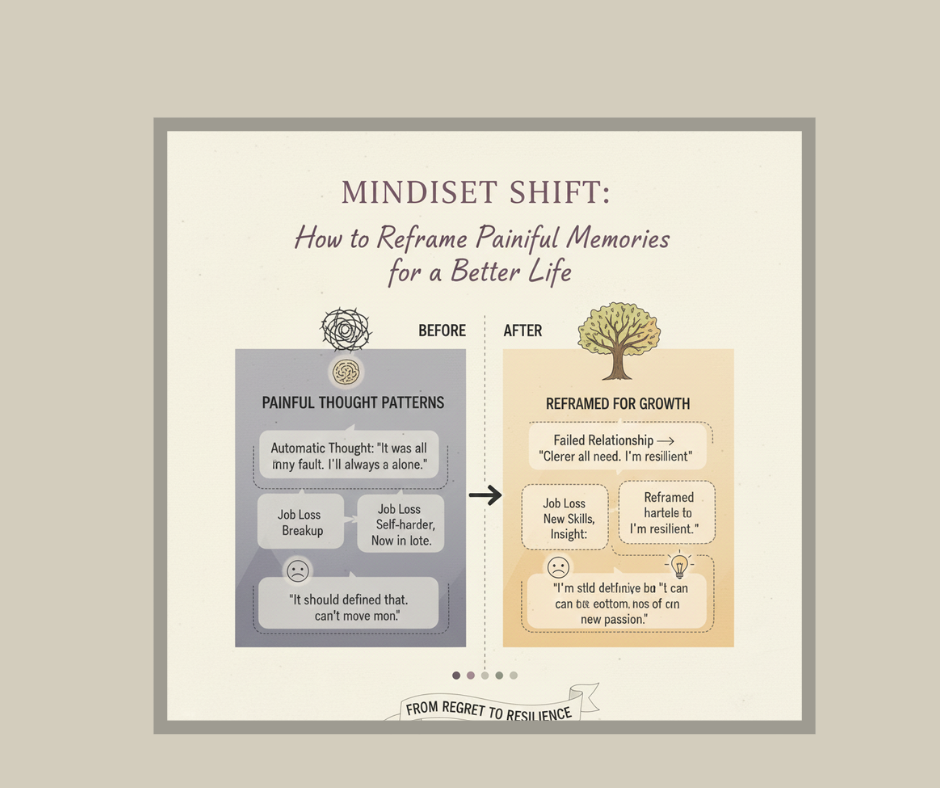
Instead of seeing past experiences solely as painful, consider reframing them as lessons. Each mistake, heartbreak, or regret carries insights for growth and resilience. By viewing emotional scars from the past as learning opportunities, you can reduce their emotional weight and use them to make better choices in life.
Letting Go of Blame and Guilt
Holding onto blame or guilt keeps past emotional pain alive. Whether it is blaming yourself or others, carrying this weight affects mental clarity and relationships. Letting go of blame frees you to focus on the present and rebuild emotional strength. This is a core principle in emotional healing strategies for painful past experiences.
Gratitude Practices to Focus on the Present
Practicing gratitude helps shift attention from past pain to present blessings. Simple habits like listing daily positive experiences or acknowledging small wins can reduce the impact of lingering memories. Gratitude supports coping with past trauma and encourages a more balanced, peaceful mindset.
Techniques On How To Reframe Past Memories
Techniques on how to stop past memories from hurting your present include reframing, self-compassion, and gratitude exercises. Combining these practices helps transform emotional pain into personal growth, making past memories less disruptive in daily life.
Long-Term Emotional Healing
Some assume that healing is a one-time effort. The truth is that lasting emotional freedom comes from consistent habits and practices that strengthen your mind and heart over time.
Building Resilience and Emotional Strength
Resilience is the ability to adapt and recover from past emotional challenges. Strengthening emotional resilience allows you to face triggers without being overwhelmed. Simple habits like reflection, mindfulness, and healthy communication foster this growth and help cope with past trauma effectively.
Maintaining Mental Clarity and Inner Peace
Keeping mental clarity involves letting go of cluttered thoughts and focusing on what truly matters. Inner peace grows as you consciously process past memories, forgive yourself, and adopt positive thinking patterns. This ongoing practice ensures that old memories do not dominate your present emotional state.
Recognizing Progress and Celebrating Small Wins
Acknowledging even minor improvements reinforces healing. Celebrating small victories like feeling less anxious, opening up to someone new, or overcoming a triggering memory encourages motivation and confidence. Self growth and inner healing thrive when progress is recognized and appreciated.
Preventing Old Memories from Resurfacing Negatively
Long-term emotional healing includes strategies to prevent past memories from resurfacing in harmful ways. Practices like mindfulness, journaling, and consistent self-care keep emotional scars from the past from controlling your thoughts and reactions. Achieving emotional freedom requires patience and daily commitment.
Integrating Practices for Lasting Healing
Combining resilience building, gratitude, reflection, and coping strategies creates a foundation for sustainable emotional health. By consistently applying these practices, you ensure that past emotional pain becomes a source of insight rather than a burden, allowing you to live more fully in the present.

When to Seek Professional Help
Many people think that professional help is only for extreme cases of past memories that still hurt. The truth is, therapy can benefit anyone struggling to cope with lingering emotional pain, even if it feels manageable. Getting guidance early can prevent memories from causing long-term stress or affecting relationships.
Signs Therapy or Counseling Is Needed
Sometimes it is hard to know when to reach out. Signs include feeling stuck in the past, constant emotional triggers, difficulty trusting others, or struggling to function daily. If you notice these patterns, seeking professional help can guide you through coping with past trauma more effectively.
Different Therapy Options
There are several approaches to address past emotional pain:
Talk Therapy: Sharing your experiences in a safe space can help process and release lingering memories.
Cognitive Behavioral Therapy (CBT): Focuses on changing negative thought patterns connected to painful memories.
Mindfulness Therapy: Uses meditation and awareness practices to help manage emotional responses.
These therapies offer structured tools and techniques, making them some of the best ways on how to stop past memories from hurting your present.
How Professionals Help with Past Emotional Pain
Trained professionals guide you in understanding the root of your pain, offer coping strategies, and support emotional healing. They help you navigate unresolved trauma, regrets, or emotional scars from the past in a way that fosters long-term resilience and emotional freedom. Using therapy tips for past emotional pain and a guide to overcoming past regrets and memories, professionals make the healing process more focused and effective.
Conclusion
It is often assumed that healing past memories that still hurt is a complicated or impossible task. The reality is that small, consistent steps can bring real change and emotional freedom.
Recap of Practical Steps and Coping Strategies
From acknowledging memories and journaling emotions to mindfulness, self-forgiveness, and professional therapy, there are many strategies to release emotional baggage. Daily coping practices like breathing exercises, positive affirmations, supportive relationships, and hobbies help maintain balance and mental clarity.
Encouragement to Take Action Gradually
Healing is a journey, not a quick fix. Taking small, consistent actions every day—whether it is practicing gratitude, reframing past events, or seeking guidance—leads to lasting change. Progress may be gradual, but each step strengthens emotional resilience.
Ending on a Motivating Note
Remember, past memories that still hurt do not define you. With the right mindset, practical strategies, and occasional professional support, you can transform old pain into personal growth. Embrace your journey, celebrate small wins, and allow yourself to experience peace and freedom in the present.
Reinforcing Emotional pain Naturally
By understanding past emotional pain, coping with past trauma, and taking intentional steps to heal old memories, you can finally move beyond lingering memories and reclaim your emotional well-being.
If you need guidance or support in healing past memories that still hurt, reach out to us—our team is here to help every step of the way.