
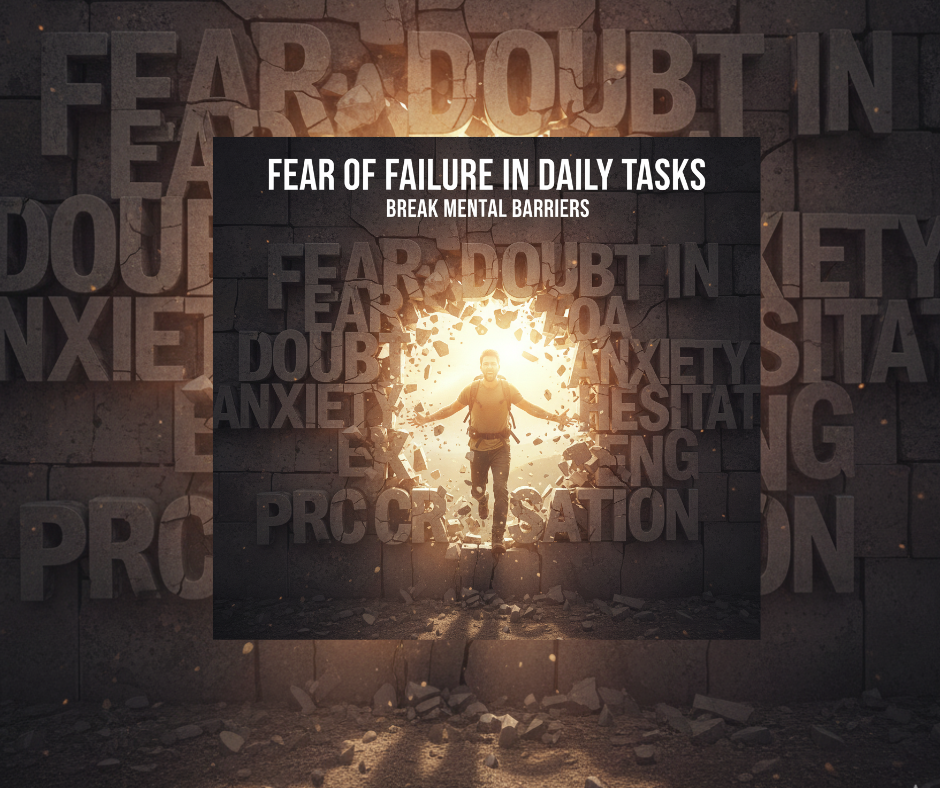
Introduction: Rethinking Fear of Failure in Daily Tasks
Fear of failure in daily tasks is often misunderstood as laziness or lack of ambition, but that couldn’t be further from the truth. It is actually a natural reaction of the mind when facing uncertainty or the risk of making mistakes. Understanding this response is the first step to regaining control and boosting confidence.
Why Fear Shows Up in Everyday Life
Have you ever hesitated before sending an email, finishing a report, or trying something new because you worried about making a mistake? This hesitation is common. Fear of failure in daily tasks can quietly affect decisions and stop even simple actions from being completed.
How It Impacts Growth and Productivity
Beyond slowing down tasks, fear chips away at self-confidence, limits personal growth, and lowers productivity. Avoiding small daily challenges can create a cycle of procrastination, self-doubt, and missed opportunities if left unchecked.
What You Will Gain From This Blog
Thankfully, fear can be managed. This blog will provide actionable tips to identify fear, understand its triggers, and take confident steps forward. You will learn how to reduce anxiety, stop procrastination, and strengthen self-belief in everyday life.
Understanding Fear of Failure
What It Really Means in Daily Tasks
Fear of failure is not always about major life decisions. It often appears in small tasks like replying to messages, preparing reports, or speaking up during meetings. That inner voice that whispers, “What if I mess this up?” can be a constant roadblock.
Common Triggers That Hold You Back
Several triggers intensify this fear, such as worrying about mistakes, fearing judgment, or anxiety about results. Deadlines, responsibilities, and pressure from expectations also increase hesitation and self-doubt.
How Fear Affects Confidence and Motivation
Fear of failure can slowly undermine motivation you can also read more from this Article . It encourages procrastination, avoidance, and self-sabotage. Concepts like low self-confidence, performance anxiety, task avoidance, and procrastination fear are directly linked to these patterns.
Breaking Free from Mental Blocks
Identifying these triggers is the first step toward overcoming fear. With awareness, you can implement small actions and mindset shifts to gradually reduce anxiety and take control of your daily tasks.
The Psychology Behind Fear of Failure
Fear of failure in daily tasks is often mistaken for a lack of courage, but it is actually rooted in mindset and past experiences. The way we interpret challenges, remember mistakes, and respond to criticism shapes how we handle even small daily tasks.
How Mindset and Past Experiences Influence Fear
Experiences from the past can make the brain associate new tasks with potential negative outcomes. Even minor mistakes may feel overwhelming, and over time, this creates a habit of hesitation and anxiety toward everyday activities.
Perfectionism and the Fear of Criticism
Perfectionism makes fear worse by creating unrealistic standards. Fear of criticism from others can intensify stress, making small mistakes feel disastrous. This can trigger performance anxiety, low self-confidence, and task avoidance.
How Fear Leads to Mental Blocks and Avoidance
When the brain focuses on potential embarrassment or failure, mental blocks arise. Tasks that should be simple become stressful, and opportunities for growth are missed. Fear of failure connects closely to avoiding challenges and overthinking decisions.
Why Understanding Your Fears Matters
Awareness is the first step toward overcoming fear. Recognizing how mindset, past experiences, and perfectionism feed fear allows practical steps to replace hesitation with confident action. Understanding triggers empowers you to gradually build control over daily tasks.
Signs You’re Struggling with Fear of Failure
Fear often manifests subtly, influencing behavior without obvious signs. Spotting these patterns early can prevent fear from dominating productivity and confidence.
Avoiding Tasks or Delaying Action
Procrastination and task avoidance are strong indicators of fear. Hesitation to take on responsibilities or complete simple tasks is often linked to fear of responsibility and fear of making mistakes.
Overthinking and Indecision
Excessive doubt or constant weighing of options is a key sign. Fear of taking risks and worrying about potential failure can make even small decisions feel overwhelming.
Anxiety and Stress During Simple Tasks
Feeling tense, mentally drained, or physically stressed when completing routine tasks often indicates fear of failure. Even normal assignments can trigger anxiety when self-doubt is present.
Negative Self-Talk and Self-Doubt
Critical inner voices, like “I’ll mess this up” or “I’m not good enough”, are common symptoms. These thoughts often connect to fear of embarrassment and fear of judgment.
Recognizing Subtle Triggers
Other subtle signs include avoiding new challenges, hesitating on decisions, or second-guessing completed work. Being aware of these behaviors helps tackle fear before it becomes a barrier to success.

How Fear of Failure Shapes Everyday Life
It’s often assumed that fear of failure only affects major life choices, but it quietly impacts everyday activities too. From simple work tasks to personal decisions, this fear can limit progress and affect mental wellbeing. Understanding where it shows up is key to taking control.
At Work: Hesitation and Procrastination
Fear of failure can make routine work feel overwhelming. Procrastination, hesitation in decision-making, and worry about disappointing colleagues are common signs. When anxiety creeps in, even small tasks feel risky. This links closely to daily productivity blocks and coping with fear at work.
In Studies: Anxiety and Underperformance
Students and learners often struggle with fear of failure in studies. The worry of underperforming or failing exams can create mental stress, lower motivation, and increase avoidance behaviors. This fear can also lead to over-preparation or procrastination, which ultimately slows progress.
In Personal Life: Avoidance and Rejection
Fear doesn’t stop at work or studies. It can affect personal life by making you avoid new challenges, hesitate to try new activities, or worry about rejection. Even small social interactions may trigger stress, showing how deeply fear of failure can shape daily habits.
Emotional and Mental Impact
Chronic fear can harm emotional resilience and mental health. Anxiety, low self-confidence, and self-doubt often emerge as a result. Without strategies to manage it, fear of failure can become a barrier to growth and productivity in multiple areas of life.
Practical Tips to Overcome Fear of Failure
While fear of failure is natural, there are practical ways to reduce its impact and regain confidence in daily tasks.
Break Tasks Into Small Steps
Large tasks can feel intimidating, so start small. Breaking projects into manageable steps makes them less overwhelming and builds momentum. This method helps combat daily productivity blocks and keeps fear from taking over.
Focus on Progress, Not Perfection
Shift your mindset from needing to be perfect to making consistent progress. Celebrate small wins, learn from mistakes, and gradually build confidence. This approach is particularly effective for those dealing with self-sabotage habits or procrastination fear.
Use Positive Self-Talk
Counter negative thoughts with affirmations like “I can handle this” or “Mistakes are part of learning”. Positive self-talk reduces anxiety and encourages action, helping you overcome fear of mistakes and hesitation.
Practice Mindfulness and Stress Management
Techniques such as deep breathing, meditation, and short mindfulness exercises can calm your mind during stressful tasks. Managing stress effectively allows you to focus on tasks without fear dominating your attention.
Build Confidence Through Repeated Action
Confidence grows with experience. Taking small actions repeatedly, even in the face of fear, helps the brain adapt and reduces anxiety over time. This is a powerful strategy for those seeking tips to stop fearing failure at work or how to overcome fear of failure in daily tasks.
Combine Strategies for Best Results
Using a combination of breaking tasks into steps, positive self-talk, and mindfulness creates a strong foundation for overcoming fear. Over time, these practices help you tackle daily productivity blocks, cope with fear, and strengthen resilience.
Strategies to Build Long-Term Confidence
Confidence is often mistaken as something people are either born with or without, but that’s not true. Real confidence is built over time through consistent practice, mindset shifts, and intentional habits. Anyone can strengthen it, even if fear of failure has held them back for years.
Set Realistic Goals and Celebrate Small Wins
One of the most effective ways to build lasting confidence is to set achievable goals. Break bigger objectives into small steps and celebrate each accomplishment. These small wins reinforce a sense of progress and gradually reduce lack of confidence in tasks and hesitation in daily tasks.
Embrace Failure as a Learning Opportunity
Failing doesn’t mean you’re incapable. Treat each setback as a chance to learn, adjust, and grow. When failure is reframed this way, fear of mistakes becomes a tool for improvement rather than a roadblock.
Surround Yourself with Supportive People
The company you keep can influence your mindset significantly. Supportive friends, mentors, or colleagues encourage you to take action, reduce self-doubt, and handle mistakes without fear. This creates an environment where confidence can thrive.
Keep a Journal of Achievements and Challenges
Documenting your accomplishments and reflecting on challenges helps track growth over time. Writing down wins, lessons learned, and moments you faced fear keeps motivation high and reinforces that fear is manageable.
Techniques for Reducing Anxiety While Facing Tasks
Some assume anxiety is unavoidable when fear of failure strikes, but simple techniques can significantly reduce it. These practices help calm the mind, improve focus, and make daily tasks feel less intimidating.
Breathing Exercises and Meditation
Deep breathing and short meditation sessions can reduce stress and restore focus. Even a few minutes before starting a task helps manage tension and prepares the mind to act confidently.
Visualization of Success
Imagine completing tasks successfully before you even start. Visualizing positive outcomes trains the mind to focus on achievement rather than fear, making it easier to take action.
Preparing in Advance to Reduce Fear of Outcomes
Preparation builds confidence. When you organize your work, plan ahead, or practice a presentation, the likelihood of errors drops. This reduces how fear of failure affects productivity and the anxiety associated with daily responsibilities.
Cognitive Reframing to Turn Fear into Motivation
Instead of seeing fear as a signal to stop, interpret it as a guide for action. Cognitive reframing allows you to transform anxiety into motivation, helping overcome hesitation and encouraging consistent progress.
Overcoming Anxiety When Facing Daily Challenges
By combining breathing exercises, visualization, preparation, and cognitive reframing, you create a practical toolkit for handling fear. These strategies reduce stress, improve focus, and help you approach tasks with confidence rather than hesitation.

When to Seek Professional Help
Fear of failure in daily tasks is often assumed to be something you can simply “tough out,” but sometimes it goes deeper than what self-help strategies can fix. Persistent anxiety, avoidance, or stress that disrupts daily life may require professional guidance.
Signs Fear is Affecting Your Daily Life
If you notice consistent procrastination, mental blocks, or a feeling of dread before performing simple tasks, fear may be impacting your daily routine significantly. Physical symptoms like tension, racing thoughts, or sleeplessness can also indicate that professional support is needed.
Types of Support Available
Professional help comes in several forms. Coaching can provide practical strategies for tackling tasks confidently. Counseling or therapy can address deeper emotional patterns, such as fear of criticism, anxiety about failure, or low self-confidence. These approaches help in building emotional resilience and breaking cycles of avoidance.
Benefits of Professional Guidance
Guidance from experts can fast-track your progress. Professionals can teach coping techniques for performance anxiety, help you recognize and overcome mental blocks, and provide accountability for taking consistent action. Working with a coach or therapist makes it easier to manage fear and approach daily challenges with confidence.
Daily Habits to Keep Fear of Failure at Bay
Fear of failure doesn’t disappear overnight, but consistent daily habits can prevent it from controlling your life. Small, intentional actions create momentum and reinforce confidence over time.
Morning Routines that Build Confidence
Starting your day with structured routines—like exercise, journaling, or setting priorities—sets a positive tone. These habits prepare your mind for challenges and reduce anxiety about failure before tasks even begin.
Regular Reflection and Learning from Mistakes
Reflecting on what went well and what could be improved encourages growth. Viewing mistakes as learning opportunities prevents fear of not succeeding from holding you back, and strengthens resilience for future tasks.
Staying Consistent with Small Daily Actions
Consistency beats perfection. Taking small steps each day builds momentum and reduces hesitation in daily tasks. This helps counter fear of trying again and gradually increases your confidence and productivity.
Using Motivational Reminders
Simple reminders, affirmations, or visual cues can keep motivation high. Phrases like “I am capable of completing this task” or “Mistakes are part of learning” reinforce positive thinking and reduce self-doubt, helping you tackle tasks without fear.
Conclusion: Take Control of Fear of Failure in Daily Tasks
It’s often assumed that fear of failure is something you just have to live with, but that’s not true. Fear can be understood, managed, and gradually reduced with the right mindset and strategies. Recognizing it is not a weakness—it’s a first step toward taking control of your daily tasks and building confidence.
Recap of Key Points
Throughout this blog, we explored how fear of failure in daily tasks can silently affect your work, studies, and personal life. We identified the signs, including procrastination, overthinking, and negative self-talk. Practical tips were shared, such as breaking tasks into small steps, using positive self-talk, practicing mindfulness, and building long-term confidence through repeated action. We also discussed professional help and daily habits that strengthen resilience, reduce anxiety, and keep fear from controlling your productivity.
Encourage Daily Action
The most important takeaway is that change happens through consistent effort. By taking small, deliberate actions each day, you start to replace hesitation with confidence. Even tiny steps like completing one small task or practicing positive affirmations make a noticeable difference over time.
Reinforce Confidence
Remember, fear is not permanent. It’s a natural response that can be managed. With awareness, practical strategies, and supportive habits, you can transform fear from a roadblock into a motivator. You can overcome anxiety about failure, hesitation in daily tasks, and fear of mistakes by building mental resilience and trusting yourself to take action.
Strong Closing and Call to Action
Start small, take action, and embrace the learning process. Each completed task, no matter how minor, strengthens your confidence and reduces fear. Commit to daily progress, celebrate small wins, and gradually you will find that fear of failure in daily tasks no longer controls your life—it empowers you to grow.
Contact Us
Have questions, suggestions, or need guidance on overcoming fear of failure in daily tasks? We’d love to hear from you. Reach out and let’s start a conversation about building confidence, boosting productivity, and tackling everyday challenges together.
You can reach out to us via email, phone, or our website form. Your journey to managing fear and achieving more starts with a simple message. Don’t wait—take the first step today!