Introduction to the 7 Stages of Business Growth
A common belief says business growth happens in a straight line. Work harder sell more and success will automatically follow. That idea sounds nice but it is far from reality. Businesses do not grow randomly. They move through clear business growth stages. Missing even one stage often leads to confusion cash issues or complete failure. Understanding the 7 stages of business growth gives clarity control and direction from day one.
Why Understanding the Stages of Business Growth Matters
First of all growth without understanding is risky. When founders do not know where their business stands they use the wrong strategies at the wrong time. This is where most mistakes happen in the stages of growth in business.
Knowing the business growth stages helps you predict problems before they hit. It improves decision making and saves money energy and time. More importantly it helps you focus on what truly matters at your current phase instead of copying others blindly.
As a result businesses that follow a clear business growth framework stay stable even during tough times. They build systems instead of chasing shortcuts. This is the foundation of sustainable business growth.
What Are the 7 Stages of Business Growth and Why Most Businesses Fail Without Clarity
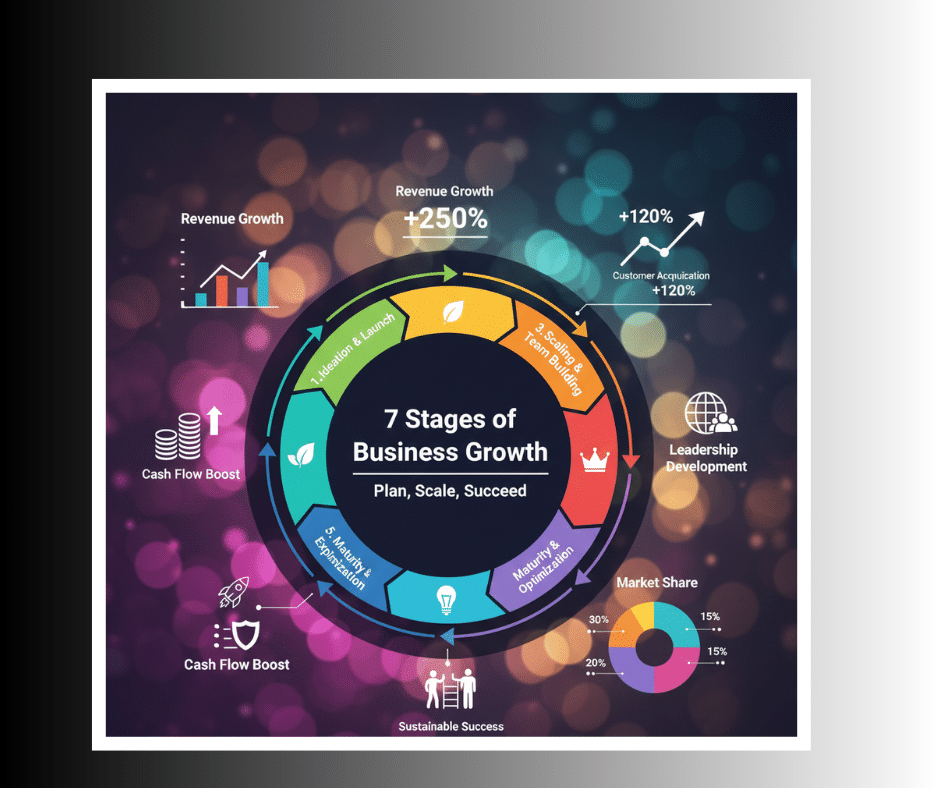
To put it simply the seven stages of business growth describe how a company moves from an idea to long term success or exit. Each stage has its own challenges priorities and goals.
The real problem is not lack of effort. The real issue is lack of clarity. Many founders treat early stage business growth and business scaling stages the same way. That creates pressure burnout and bad decisions.
Without understanding the phases of business growth businesses either scale too early or stay stuck too long. This confusion leads to cash flow stress weak teams and unclear direction. Clear awareness of the business growth lifecycle stages removes guesswork and builds confidence.
Quick Overview of the Business Growth Lifecycle Stages
At a high level the business growth process starts with an idea and moves through survival stability growth expansion maturity and renewal. These business growth lifecycle stages are not theory. They show how businesses grow over time in real markets.
Each stage demands a different mindset and different actions. For example startup growth stages focus on validation while later business maturity stages focus on leadership and systems.
When you understand this flow you stop forcing growth and start managing it wisely. That is how smart founders move through the business growth journey without chaos.
Who This Guide to Business Growth Stages Is For
This guide to business growth stages is for startups small businesses and growing brands that want clarity. It is for founders who feel stuck overwhelmed or unsure about their next move.
Whether you are growing a small business or scaling from startup to company this breakdown will help you identify where you are right now. Once you know your stage you can use the right business growth strategy instead of guessing.
Understanding Business Growth Stages Explained Simply
Now that the importance is clear let us simplify everything. Business growth stages explained simply means removing jargon and focusing on how businesses actually grow in the real world.
What Are Business Growth Stages and How Businesses Grow Over Time
Business growth stages are steps that every company passes through as it evolves. These stages of business development show how needs priorities and risks change over time.
At the beginning growth is about survival. Later it becomes about systems people and leadership. Over time the business growth timeline shifts from doing everything yourself to building a structure that runs smoothly.
Understanding how businesses grow helps you stop reacting and start planning. This is where business growth planning becomes powerful.
Difference Between Business Growth Phases and Business Scaling Stages
Although these terms sound similar they are not the same. Business growth phases focus on internal stability revenue flow and structure. On the other hand business scaling stages focus on expanding reach increasing capacity and growing faster.
Many founders jump into scaling a business step by step without mastering growth basics. As a result they face operational stress and team breakdowns. Knowing this difference protects you from scaling too soon.
Smart business growth management means growing first then scaling at the right time.
Common Myths About the Stages of Growth in Business
One popular myth says every business should grow fast. In reality fast growth without structure leads to collapse. Another myth says once a business becomes stable the hard work is over. That is never true.
Each stage brings new business growth challenges. What worked before may not work again. Believing myths keeps businesses stuck and unprepared.
Understanding the business growth stages explained clearly helps founders stay realistic and adaptable.
How the Business Growth Process Looks in Real Life
In real life growth is not perfect or smooth. Businesses move forward pause and sometimes step back. That is normal in the business growth process.
Some companies stay in small business growth stages longer to build strong foundations. Others move faster but only when systems are ready. Real growth means adjusting strategies based on your current business growth phase.
Once you see growth as a journey instead of a race you make better decisions. That mindset sets the stage for mastering the 7 stages of business growth.
Stage One Idea and Startup Growth Stage
A common belief says once you get a business idea everything will start falling into place automatically. The truth is very different. The idea stage is the most fragile part of the 7 stages of business growth. Most businesses do not fail later. They fail right here because the foundation is weak or rushed.
Early Stage Business Growth and Idea Validation
At this point early stage business growth is not about profit or scale. It is about validation. You are testing whether your idea solves a real problem or not. Many founders skip this step and jump straight into selling.
Instead you need feedback. Talk to real people. Test small offers. Watch how customers respond. This is how the startup growth stages begin in a healthy way.
Idea validation reduces risk. It saves money and time. More importantly it shows whether your business growth journey is worth continuing or needs adjustment.
Startup Growth Stages and Finding Product Market Fit
Once validation begins the next focus is product market fit. This means your product or service matches what people actually want. Without this fit the business growth process becomes painful.
During the startup growth stages you should keep things simple. One clear offer. One target audience. One main problem solved well. This clarity supports smoother stages of business development later.
When product market fit clicks growth feels easier. Marketing improves. Sales become consistent. That is a strong signal you are moving forward in the business growth stages.
Common Problems in Business Growth Stages at the Beginning
The early stages of growth in business come with predictable problems. One major issue is trying to do everything at once. Another issue is copying competitors without understanding your own market.
Many founders also confuse activity with progress. They stay busy but avoid real validation. This slows down the business growth timeline and creates frustration.
Recognizing these common problems in business growth stages helps you avoid unnecessary mistakes and stay focused on the right actions.
Business Growth Mindset Needed for the First Stage
Mindset matters more than tools at this stage. You need patience curiosity and flexibility. Ego is dangerous here. Listening is powerful.
A strong business growth mindset accepts feedback and adapts quickly. Instead of chasing fast wins you focus on learning. This mindset builds confidence and prepares you for the next business growth phase.
Stage Two Survival and Small Business Growth Stage
Another common belief says if a business survives the first stage success is guaranteed. That belief causes more stress than motivation. The survival stage is one of the hardest parts of the seven stages of business growth.
Small Business Growth Stages and Cash Flow Struggles
In this phase cash flow becomes the main concern. Revenue exists but expenses grow fast. Many small business growth stages fail due to poor cash control not lack of sales.
Managing money becomes a daily task. You must track income costs and profit clearly. Cash flow awareness is a core part of business growth fundamentals.
When cash flow improves survival pressure reduces and smarter decisions become possible.
Business Growth Challenges Most Founders Face Here
Founders face mental and operational pressure at this stage. Long hours limited teams and unclear systems create stress. These business growth challenges test commitment.
Another issue is trying to scale too early. Many attempt business expansion stages before stability exists. That creates chaos and burnout.
Understanding your position in the business growth stages helps you slow down and fix core issues first.
Business Growth Fundamentals to Survive This Phase
Survival depends on fundamentals. Clear pricing consistent sales basic systems and simple processes. These elements form the backbone of business growth management.
Focus on what works and remove what does not. This is not the time for complexity. Strong fundamentals prepare your business for future business scaling stages.
Growing a Small Business Without Burning Out
Burnout is common in this stage. Growing a small business does not mean sacrificing health or peace. Setting boundaries and building small systems helps reduce pressure.
Delegate when possible. Automate simple tasks. Take breaks. Sustainable business growth requires energy not exhaustion.
When survival becomes stable you naturally move closer to the next stage of business growth with confidence and control.

Stage Three Stability and Business Growth Management
A common belief says once a business becomes stable the hard work is over. That belief is misleading. Stability is not the finish line in the 7 stages of business growth. In reality this is where serious business growth management begins. Without structure and planning stability can disappear very quickly.
Business Growth Structure and Basic Systems
At this stage business growth structure becomes essential. You move from handling everything yourself to building simple systems. These systems manage sales operations customer support and daily workflows.
Basic systems reduce confusion. They save time and protect consistency. This is a key moment in the stages of business development where structure replaces chaos.
A strong structure supports future business scaling stages. Without it growth becomes stressful instead of exciting.
Business Growth Indicators That Show Stability
Stability shows up through clear signs. Revenue becomes predictable. Customers return regularly. Expenses are under control. These are strong business growth indicators.
Another indicator is reduced dependency on the founder. When the business can function without constant supervision stability is real.
These signals confirm that your position in the business growth lifecycle stages is strong and ready for the next move.
How to Manage Stages of Business Development Smartly
Managing growth smartly means knowing when to improve systems and when to hold steady. At this stage business growth management focuses on optimization not expansion.
Review processes regularly. Improve weak areas. Strengthen what works. This keeps the business growth process smooth and controlled.
Smart management prevents common mistakes in business growth stages like over hiring or unnecessary spending.
Business Growth Planning Stages for Consistent Income
Planning now becomes strategic. Business growth planning stages focus on consistent income rather than survival.
You set monthly targets track performance and adjust strategies calmly. Consistency creates confidence and prepares the ground for scaling a business step by step.
With planning in place stability turns into momentum.
Stage Four Growth and Scaling a Business Step by Step
Another popular belief says growth should be fast or it is pointless. That mindset destroys many businesses. In the seven stages of business growth scaling works only when it is intentional and controlled.
Business Scaling Stages and Expanding Operations
Scaling starts with expanding operations carefully. You add team members improve systems and increase capacity. This is where business scaling stages differ from early growth phases.
Expansion must follow demand not ego. When operations expand smoothly the business growth journey becomes sustainable.
Controlled expansion keeps quality high and stress low.
How to Scale Business at Each Growth Stage
Scaling looks different at every stage. Here scaling means doing more of what already works. You do not reinvent the business. You refine it.
Scaling a business step by step protects cash flow and team morale. It also strengthens your position in the business growth roadmap stages.
Knowing how to scale business at each growth stage prevents overextension.
Business Growth Tactics and Techniques That Work
Effective business growth tactics include process automation clear roles and performance tracking. These techniques reduce dependency on individuals.
Another proven technique is focusing on one growth channel at a time. This avoids dilution and improves results.
Smart techniques keep the business growth timeline steady and predictable.
Business Expansion Stages Without Losing Control
Expansion without control leads to collapse. To avoid this maintain visibility over finances operations and people.
Regular reviews clear communication and strong leadership protect control during business expansion stages.
When done right expansion feels manageable not overwhelming. That balance defines successful business growth stages.
Stage Five Expansion and Business Growth Strategy
A common belief says expansion automatically means success. Bigger teams bigger markets and higher revenue look impressive but expansion without strategy often creates silent damage. In the 7 stages of business growth this phase demands thinking deeper not faster. Strategy now matters more than effort.
Business Growth Roadmap and Long Term Vision
At this stage growth must follow a clear direction. A business growth roadmap helps you see where the business is going and why. It connects daily actions with long term outcomes.
Long term vision is not about dreaming big only. It is about setting realistic milestones and choosing markets wisely. A clear roadmap reduces confusion and aligns teams.
This clarity strengthens your position in the business growth lifecycle stages and protects momentum.
Building a Growth Driven Business Model
Expansion needs a strong model. A growth driven business model focuses on repeatable revenue scalable processes and customer retention.
Instead of chasing new ideas constantly you refine what already works. This approach supports smoother business expansion stages and reduces risk.
When the model is solid growth becomes predictable and manageable.
Business Growth Optimization and Smarter Decisions
Optimization replaces experimentation here. Business growth optimization means improving margins systems and performance using real data.
Smarter decisions come from tracking the right metrics. You stop guessing and start adjusting based on facts. This improves business growth management and reduces waste.
Optimization keeps expansion efficient and controlled.
Sustainable Business Growth vs Fast Risky Growth
Fast growth looks exciting but often hides cracks. Sustainable business growth focuses on stability profitability and long term value.
Risky growth burns teams and cash. Sustainable growth builds trust and resilience. Choosing sustainability keeps your business strong across all stages of business growth.
Stage Six Maturity and Business Growth Success
Another belief says once a business reaches maturity growth stops. That idea is dangerous. Business maturity stages require a new kind of focus not less effort. Success now depends on leadership and refinement.
Business Maturity Stages and Leadership Focus
At maturity leadership replaces hustle. Founders shift from doing to guiding. Decision making becomes strategic.
Strong leadership protects culture quality and direction. This focus supports long term business growth success and stability.
Leadership growth is as important as business growth at this stage.
Business Growth Systems and Workflows
Mature businesses rely on strong systems. Business growth systems and workflows ensure consistency across teams and locations.
Clear workflows reduce errors and improve efficiency. They also prepare the business for future expansion or transformation.
Systems protect performance even during change.
Business Growth Management at a Mature Level
Management now focuses on refinement not survival. Business growth management includes performance reviews forecasting and strategic planning.
You evaluate what to improve what to remove and what to protect. This keeps the business growth process healthy and adaptive.
Mature management avoids overconfidence and stays alert.
Avoiding Stagnation in Later Business Growth Stages
Stagnation is the biggest risk here. To avoid it businesses must innovate listen to customers and update strategies.
Avoiding stagnation means staying curious and flexible. This mindset keeps momentum alive even in later business growth stages.
Growth never truly ends. It only changes form.

Stage Seven Renewal or Exit in the Business Growth Lifecycle
A common belief says once a business reaches the final stage the journey is over. That idea limits growth and kills opportunity. In the 7 stages of business growth the final stage is not about stopping. It is about choosing the smartest next move. Renewal or exit both require clarity courage and planning.
Business Growth Transformation and Reinvention
At this point markets shift customer needs change and competition increases. Business growth transformation becomes necessary to stay relevant. Reinvention does not mean starting from zero. It means updating offers processes or positioning.
Many successful brands reinvent their services or target a new audience. This keeps the business growth journey alive and competitive. Reinvention is a strategic move not a failure.
Business Growth Solutions When Markets Change
Markets never stay the same. Customer behavior technology and demand evolve constantly. Business growth solutions help businesses respond instead of panic.
Solutions may include diversifying income streams improving digital presence or refining value propositions. These actions protect long term stability within the business growth lifecycle stages.
Adaptability is the real advantage here.
Scaling From Startup to Company and Beyond
This stage reflects how scaling from startup to company truly looks. Structure leadership and systems are already in place. Growth now happens through partnerships acquisitions or market expansion.
Moving beyond a founder led setup requires trust in teams and systems. This shift defines true success in the seven stages of business growth.
Planning Exit or Renewal in the Seven Stages of Business Growth
Exit planning is not quitting. It is smart strategy. Whether selling merging or handing over leadership planning early protects value.
Renewal is another option. Some founders choose to relaunch or restructure instead of exiting. Both paths need clarity and preparation.
Knowing when to renew or exit shows mastery of the stages of business development.
Business Growth Stages for Startups vs Small Businesses
Another common belief says all businesses grow the same way. That assumption creates wrong expectations. Business growth stages for startups and small businesses follow similar paths but with different pace priorities and risks.
Business Growth Stages for Startups Explained
Startups focus heavily on validation speed and scalability. Startup growth stages move faster and carry higher risk.
Funding pressure growth targets and rapid testing define this path. Startups often push through business growth phases quickly to capture market share.
Understanding this helps founders avoid burnout and poor decisions.
Business Growth Stages for Small Businesses Compared
Small businesses grow with stability in mind. Cash flow relationships and local markets matter more here.
Business growth stages for small businesses move slower but stronger. These businesses focus on consistency and long term survival rather than rapid scaling.
Both paths are valid when aligned with goals.
How the Phases of Business Growth Differ by Model
Business models shape growth. Service based businesses grow differently than product based ones. Online models differ from local operations.
The phases of business growth adjust based on revenue streams team size and customer behavior. Recognizing this prevents comparison traps.
Growth should match the model not trends.
Choosing the Right Business Growth Roadmap Stages
The right roadmap depends on vision resources and lifestyle goals. Some founders want scale. Others want stability.
Choosing the right business growth roadmap stages brings alignment and peace. It allows smarter planning and realistic expectations.
Growth feels easier when the path matches the purpose.
Common Mistakes Across the 7 Stages of Business Growth
A common belief says once you understand the 7 stages of business growth mistakes will automatically disappear. That belief creates overconfidence. Knowing the stages helps but only when actions match the stage. Most businesses struggle not because they lack knowledge but because they repeat the same mistakes again and again at different points of the business growth journey.
Ignoring Business Growth Planning
One of the biggest mistakes across all stages of business growth is skipping planning. Many founders rely on daily hustle and short term wins. This approach feels productive but slowly damages long term progress.
Business growth planning gives direction. It helps businesses prepare for challenges before they appear. Without planning decisions become reactive and stressful. Over time this weakens the entire business growth process.
Planning does not mean complexity. Simple plans reviewed regularly are enough to stay aligned with the right business growth phase.
Using Wrong Strategies at the Wrong Stage
Another costly mistake is applying strategies meant for later stages too early. For example using business scaling stages tactics during early stage business growth creates pressure and confusion.
Every stage of growth in business needs a different focus. What works in expansion can destroy survival. What works in maturity can slow down startups.
Understanding the stages of business development helps you choose strategies that fit your current reality not someone else success story.
Lack of Business Growth Goals and Vision
Many businesses operate without clear goals. They move forward but do not know where they are going. This lack of business growth goals creates misalignment inside teams.
Vision keeps decisions focused. Goals guide effort. Without them business growth management becomes messy and emotional.
Clear vision supports long term stability and smoother movement through the business growth lifecycle stages.
Misunderstanding the Business Growth Timeline
Growth takes time. Expecting fast results at every stage leads to frustration. Many founders quit too early or rush too much because they misunderstand the business growth timeline.
Each phase needs patience. Some stages move fast others move slow. Accepting this reality builds resilience and smarter decision making.
Respecting timing is part of mastering the seven stages of business growth.
How to Use This Guide to Grow Your Business Faster
Another common belief says reading a guide alone will grow your business. Growth happens only when action follows understanding. This guide works when you apply it step by step with honesty and consistency.
How to Grow a Business Step by Step Using This Framework
Start by identifying your current business growth stage. Be honest. Do not guess. Look at revenue systems team and stability.
Once identified focus only on the priorities of that stage. This step by step approach removes overwhelm and sharpens focus.
This is how to grow a business step by step without burning energy or money.
Matching Strategies to Your Current Business Growth Phase
Strategies must match your phase. Early stages need validation. Middle stages need systems. Later stages need leadership and optimization.
Matching strategies to your current business growth phase increases efficiency and confidence. You stop forcing growth and start guiding it.
This alignment improves results across all stages of business growth.
Creating Your Own Business Growth Roadmap
Your roadmap should reflect your goals market and lifestyle. There is no single perfect path. A business growth roadmap helps you plan realistically.
Break goals into stages. Review progress regularly. Adjust when needed. This flexibility supports sustainable business growth.
A clear roadmap turns confusion into clarity.
Final Thoughts on Mastering the 7 Stages of Business Growth
Mastering the 7 stages of business growth is not about speed or perfection. It is about awareness alignment and action.
When you respect each stage plan smartly and choose the right strategies growth becomes predictable and manageable.
This guide is your reference. Use it revisit it and grow with intention.
If you need any help , Reach Out to us.