Most People Get Forgiveness Wrong
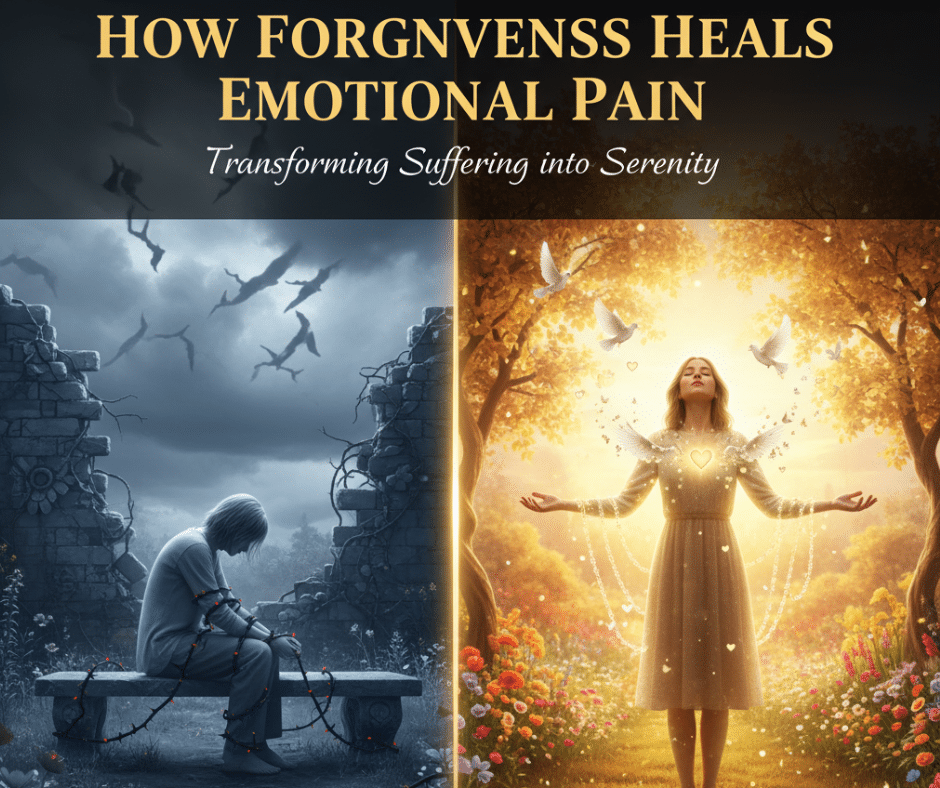
How Forgiveness Heals Emotional Pain is something many people misunderstand. Many think that forgiving someone means forgetting the hurt or letting them off the hook. That is far from the truth. Forgiveness is not about excusing bad behavior or pretending pain doesn’t exist. Instead, it’s about freeing yourself from the weight of anger, resentment, and emotional baggage. When you truly understand this, it changes the way you approach healing.
How Forgiveness Heals Emotional Pain and Transforms Life
Forgiveness has an incredible ability to heal emotional pain. By letting go of grudges, you open a door to inner peace and emotional freedom. Emotional healing through forgiveness allows you to move past resentment and reclaim your happiness. This process is not just mental—it’s deeply emotional and often spiritual. When you forgive, you give yourself a chance to breathe, feel lighter, and start fresh.
Benefits of Letting Go and Finding Peace
Letting go isn’t always easy, but the benefits are worth it. You start to notice stress reduction, improved mental clarity, and emotional stability. Forgiving someone who hurt you, or even forgiving yourself, encourages self-love and personal growth. When you release past pain, you also allow room for joy, healthier relationships, and emotional resilience. Simple acts like journaling your feelings or practicing forgiveness exercises can make a big difference in your journey toward healing.
What Emotional Pain Really Means
Emotional pain is more than just feeling sad or upset. It’s a deep, lingering discomfort caused by betrayal, rejection, or unresolved conflict. Many people carry emotional wounds for years without realizing how much they affect daily life. Emotional pain healing through forgiveness provides a pathway to release these burdens and restore mental balance.
The Impact of Unresolved Anger and Resentment
Holding onto anger and resentment can quietly take a toll on your mental health. It can lead to anxiety, depression, sleep disturbances, and even physical health issues. Emotional recovery after hurt becomes harder when grudges are nurtured over time. Forgiveness allows you to break this cycle, offering emotional freedom and reducing long-term stress.
How Forgiveness Supports Emotional Healing
Healing emotional wounds with forgiveness is not instant, but it works step by step. When you consciously choose to forgive, you reduce negative thoughts and create mental space for positive emotions. This practice, whether through meditation, self-reflection, or guided exercises, helps release emotional trauma and promotes overall wellbeing. Keyword variations like emotional pain healing through forgiveness and forgiveness for emotional trauma naturally fit here, making your path to inner peace more achievable.
Coping With Emotional Pain While Forgiving
Sometimes, forgiveness feels impossible when the pain is fresh. Simple coping strategies such as mindfulness, deep breathing, or journaling can help you manage emotions while working on forgiveness. Every small step toward letting go contributes to emotional recovery and strengthens your resilience. Over time, these practices make forgiving a natural response rather than a forced act, helping you reclaim control over your emotional life.
Forgiveness Is Not What Most People Think
Many believe that forgiveness means being weak or letting someone off the hook for hurting you. That is completely wrong. Forgiveness is actually a powerful act of self-liberation. It doesn’t mean forgetting or excusing the harm; it means freeing yourself from the chains of anger, resentment, and emotional pain. Understanding this is the first step toward real healing.
What Forgiveness Really Means
Forgiveness is a conscious decision to release negative emotions tied to past hurts. It’s not about approval or reconciliation; it’s about your emotional freedom. By practicing forgiveness, you allow your heart and mind to recover. This act of letting go supports emotional healing, boosts mental clarity, and enhances overall wellbeing. Forgiveness and emotional recovery go hand in hand, helping you move on without carrying unnecessary baggage.
Benefits of Forgiving Yourself and Others
Forgiving someone else or yourself can feel challenging, but the rewards are immense. First, it promotes inner peace and reduces stress. Forgiveness therapy techniques, such as reflective exercises, journaling, or guided meditation, provide practical ways to let go of anger and resentment. When you forgive, you also cultivate self-love and emotional resilience. How forgiving heals your heart is visible in improved mood, healthier relationships, and a greater sense of control over your life.
The Science and Psychology Behind Forgiveness
Studies in psychology show that forgiveness reduces stress hormones, lowers blood pressure, and improves overall mental health. Forgiveness activates emotional release pathways in the brain, helping you recover from trauma faster. Scientifically, forgiving someone even when they don’t apologize can trigger positive neural changes that support emotional wellbeing. This shows that forgiveness is not just spiritual—it’s also deeply rooted in psychology and human biology.
Step-by-Step Emotional Healing Through Forgiveness
Healing emotional pain through forgiveness is a gradual process, but highly effective. Start by acknowledging the hurt and how it affected you. Next, decide consciously to let go of anger and resentment. Then, focus on empathy—understanding that people make mistakes and that holding grudges only prolongs your suffering. Finally, practice daily forgiveness exercises, such as journaling or guided meditation, to reinforce emotional release and recovery.
Practical Ways to Forgive Someone Who Hurt You Deeply
Sometimes, forgiving someone who caused deep pain seems impossible. Begin with small steps: write a letter you don’t send, express your feelings in a safe space, or talk to a trusted friend or therapist. Long tail keywords like steps to forgive someone who hurt you deeply and how forgiveness can heal emotional pain fast naturally fit here. Using these practical methods consistently helps reduce emotional intensity and promotes letting go of anger gradually.
Emotional and Mental Health Benefits
Forgiveness exercises for healing don’t just relieve emotional pain—they improve your overall mental health. You experience less anxiety, better sleep, and a more positive outlook on life. Emotional release through forgiveness makes space for joy, creativity, and healthier relationships. Forgiving and moving on enhances your emotional resilience and supports personal growth, making it easier to face future challenges with clarity and calmness.

Forgiveness Is Not Just a One-Time Act
Many people assume that forgiveness is a single event—you forgive once and everything is magically fine. That is a common misconception. Forgiveness is a practice, a series of small steps you take daily to release resentment and emotional pain. Consistency is key, and incorporating practical exercises makes the process more effective and meaningful.
Guided Meditation for Forgiveness and Healing
One of the most effective ways to start practicing forgiveness is through guided meditation. Guided meditation for forgiveness and healing helps calm the mind, reduces stress, and creates emotional space to process pain. During meditation, focus on letting go of anger toward others or yourself. Visualize the hurt leaving your mind and heart. Repeating this practice regularly supports emotional release and encourages forgiveness practice daily, making it easier to move past past trauma.
Daily Forgiveness Practice Tips
Consistency is what makes forgiveness exercises for emotional trauma work. Simple daily practices can make a big difference:
Begin each day with an intention to forgive
Reflect on small instances of frustration or resentment and consciously release them
Take a moment before reacting negatively to someone to pause and practice empathy
These forgiveness tips to release past hurt reinforce positive emotional habits and gradually build emotional resilience. Even small daily actions accumulate over time, helping you create a calmer, more peaceful state of mind.
Journaling Exercises to Release Resentment
Writing down feelings is a powerful way to work through emotional pain. Forgiveness journaling lets you express anger, disappointment, or hurt without judgment. You can write letters to people who hurt you (without sending them) or simply document your journey of self-forgiveness. This practice is a proven method for emotional release and encourages mindfulness as you track your progress. It also complements other exercises like guided meditation to enhance forgiveness and emotional healing.
Forgiving Yourself First
Many think that forgiving others is all that matters, but true healing starts with self-forgiveness. Forgiveness and self love are foundational for mental and emotional wellbeing. When you let go of guilt and self-blame, you create room for personal growth and emotional balance. Self-forgiveness improves mental health, reduces anxiety, and strengthens resilience, allowing you to approach relationships and challenges with a lighter heart.
How Self-Forgiveness Improves Mental Health
Self-forgiveness is more than a feel-good concept—it actively supports emotional recovery. Accepting your mistakes, learning from them, and letting go of guilt reduces stress and emotional turmoil. Practices like affirmations, self-reflective journaling, or gentle mindfulness exercises can help you cultivate forgiveness for inner healing. Forgiving and self improvement go hand in hand, creating a foundation for stronger self-esteem and emotional stability.
Practical Tips for Self-Compassion
To make self-forgiveness effective:
Speak kindly to yourself instead of criticizing
Recognize that making mistakes is part of being human
Use journaling to process emotions and track growth
Practice daily mindfulness to stay present and let go of guilt
These small, consistent practices encourage forgiveness and self love while creating long-term personal growth and emotional freedom.
Forgiveness Is Not Always Easy
A lot of people assume that once they decide to forgive, the process is smooth and immediate. That is not true at all. Forgiveness often comes with challenges like lingering resentment, fear of being hurt again, or pride that prevents letting go. Understanding and addressing these barriers is essential for emotional pain healing through forgiveness.
Common Challenges Like Resentment, Fear, and Pride
Resentment can keep you mentally trapped, replaying past hurts over and over. Fear makes it hard to trust again or to open your heart, while pride can make you feel that forgiving is admitting weakness. Recognizing these barriers is the first step in overcoming them. Forgiveness guidance encourages you to face these feelings gently, rather than suppressing them, which is crucial for long-term emotional recovery.
Coping With Emotional Trauma While Forgiving
Forgiving while still dealing with emotional trauma requires patience and support. Start with small steps like acknowledging your pain, using mindfulness to stay present, or seeking support from a friend or therapist. Practicing forgiveness and emotional recovery helps you gradually release anger without forcing it. Simple tools like journaling or reflective meditation can make the process less overwhelming and more effective. The benefits of forgiveness for emotional health are profound, reducing stress, anxiety, and the long-term impact of trauma.
Real-Life Examples of Forgiveness
Seeing how forgiveness works in real life can be inspiring. Take Sarah, for example, who struggled with resentment after a betrayal by a close friend. By practicing guided forgiveness exercises and journaling her feelings, she gradually released her anger. Over time, Sarah noticed emotional pain healing through forgiveness, regained inner peace, and rebuilt her emotional resilience.
Another example is Mark, who faced guilt and self-blame after a family conflict. Through self-forgiveness and mindfulness practices, he learned to let go of past mistakes and improve his emotional balance. Forgiving and emotional resilience became his new normal, showing how both personal and interpersonal forgiveness can transform mental and emotional wellbeing.
How Forgiveness Changes Emotional and Mental States
These stories highlight that forgiveness doesn’t just lighten emotional burdens; it actively improves mental health. People who forgive notice reduced anxiety, better mood regulation, and stronger relationships. Emotional pain healing through forgiveness allows a person to move forward without carrying unnecessary baggage, fostering resilience and a healthier outlook on life.

Forgiveness Doesn’t End After One Step
Many people think that forgiveness is a one-time decision—you forgive once and that’s it. That is not true. Forgiveness is a consistent practice that grows stronger over time. Making it a daily habit is what leads to long-term emotional wellbeing and lasting peace.
How Consistent Forgiveness Practice Improves Mental and Emotional Health
Practicing forgiveness regularly trains your mind to release negativity, reduces stress, and boosts emotional resilience. Emotional freedom techniques forgiveness, like daily reflection or mindful letting go, allow you to gradually overcome resentment and anger. When you forgive consistently, your mental clarity improves, your mood stabilizes, and your emotional energy feels lighter. These small, consistent efforts can transform how you react to challenges and maintain inner balance.
Connecting Forgiveness With Inner Peace, Happiness, and Personal Growth
Forgiveness is more than just letting go of past hurts; it’s a pathway to personal growth and lasting happiness. Forgive to feel lighter, and you will notice a sense of inner peace taking over. Emotional freedom and forgiveness are deeply connected, creating space for joy, better relationships, and self-improvement. People who practice forgiveness regularly often report greater confidence, resilience, and a stronger sense of purpose in life.
Recap: How Forgiveness Heals Emotional Pain
At its core, forgiveness is about releasing emotional burdens and reclaiming your life. Healing emotional wounds with forgiveness not only eases mental and emotional stress but also opens the door to healthier relationships, better decision-making, and emotional freedom. Forgiveness and emotional recovery allow you to move forward without carrying unnecessary pain.
Taking Small Steps Toward Forgiveness Today
The key to experiencing the benefits of forgiveness is to start small. Begin with forgiving minor grievances, practice self-forgiveness, and gradually tackle deeper emotional wounds. Simple exercises like journaling, guided meditation, or mindful reflection can help you build a habit of letting go. Every small step contributes to emotional healing and helps cultivate lasting inner peace.
Contact Us
Take the first step today. Choose one person, or even yourself, and practice a small act of forgiveness. Start journaling your feelings, meditate for a few minutes, or simply set an intention to let go. The journey of forgiveness may take time, but the results—emotional freedom, resilience, and happiness—are worth every effort. Begin now and watch how forgiveness transforms your life.
If you need guidance, we are ready to provide our services for you. Contact us now.