
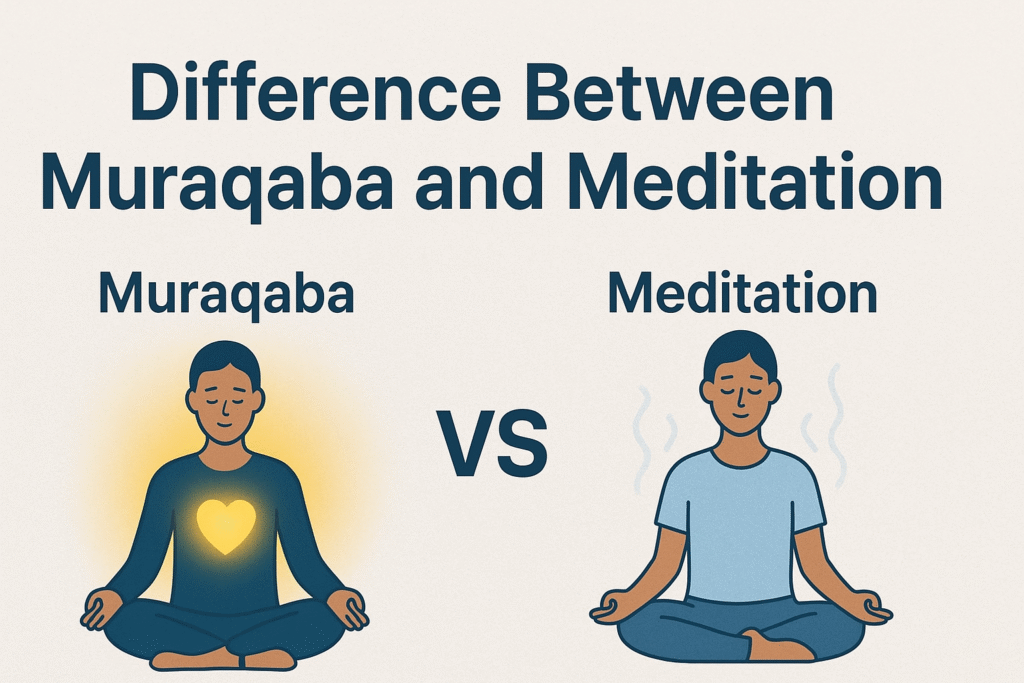
Introduction: Understanding the Difference Between Muraqaba and Meditation
Most people think that the Difference Between Muraqaba and Meditation is minimal. They imagine sitting quietly, closing their eyes, and simply “clearing the mind.” However, this is not accurate. In reality, Muraqaba is a spiritual practice rooted in Sufi tradition that engages your mind, heart, and soul in a deeper way than meditation usually does.
Why People Confuse Muraqaba with Meditation
When you first hear about Muraqaba, it can seem similar to meditation. Both involve sitting quietly and focusing internally. Yet, meditation often centers on stress relief, mindfulness, or concentration, while Muraqaba guides you to observe your inner self and connect with higher energy. Understanding this distinction can help you choose the practice that aligns with your spiritual or mental goals.
Purpose of This Blog
In this blog, we will clarify the difference between Muraqaba and meditation. By exploring their unique techniques, benefits, and spiritual aspects, you will know which practice suits your mind and soul. Additionally, we will share practical guidance for beginners looking to start Muraqaba or meditation.
What is Muraqaba?
Muraqaba is more than just sitting quietly. The term means “to observe” or “to watch over,” and it focuses on both spiritual and mental awareness. This practice allows you to connect deeply with your inner self and higher consciousness. Unlike typical meditation that often targets relaxation, Muraqaba works on spiritual energy, awareness, and personal growth.
Spiritual and Mental Aspects of Muraqaba
Firstly, Muraqaba emphasizes spiritual connection. Through guided awareness, you focus on your heart and energy, noticing thoughts without judgment. Secondly, it strengthens mental clarity. By observing your inner state, you learn to calm your mind and develop focus. This combination makes Muraqaba a unique spiritual exercise, blending mental discipline with higher awareness.
Benefits of Muraqaba
Inner Peace: Regular practice helps reduce mental chatter and brings calmness to your mind.
Mental Clarity: Concentrating on inner energy improves focus and decision-making.
Spiritual Growth: You gain awareness of your spiritual self, connecting with higher energy.
How Beginners Can Start Muraqaba
For those new to this practice, following a Muraqaba meditation guide can be very helpful. Beginners can also explore guided Muraqaba exercises for beginners and simple Muraqaba practice for mental clarity routines. Starting slowly with daily short sessions builds consistency and gradually deepens your spiritual experience.
3. What is Meditation?
Many people assume meditation is only about sitting quietly and emptying your mind. That is a common misconception. In reality, meditation is a flexible practice that helps your mind focus, calm down, and even recharge. It does not require deep spiritual knowledge or a specific belief system, which is why it is widely practiced by people from all walks of life.
Understanding Meditation in Simple Terms
Meditation, at its core, is training your mind to pay attention. Whether it is to your breathing, your thoughts, or your surroundings, meditation helps you become more aware of the present moment. You don’t need to sit for hours or follow strict rituals. Even a few minutes of daily meditation practice can improve your mental clarity and overall well-being.
Types of Meditation
Meditation comes in many forms, each suited for different needs and goals. Some of the most popular types include:
Mindfulness Meditation: Focuses on observing thoughts and emotions without judgment.
Guided Meditation: Involves following audio or a teacher’s instructions to relax and focus.
Breathing-Focused Meditation: Concentrates on breath control to calm the mind and body.
These techniques are easy to learn and perfect for beginners. They also form the foundation for more advanced meditation practices if you want to explore deeper mental or spiritual benefits.
Benefits of Meditation
Meditation offers a wide range of benefits, making it one of the most accessible self-care practices:
Stress Relief: Meditation helps reduce anxiety and mental clutter, promoting peace of mind.
Improved Focus: Regular practice enhances concentration and productivity.
Relaxation and Calm: It naturally lowers stress hormones and creates a sense of calm.
Mental Clarity: Helps you think clearly and make better decisions.
Practices like meditation techniques for focus or meditation for stress relief are simple ways to start reaping these benefits today.
4. Key Differences Between Muraqaba and Meditation
Many people think Muraqaba and meditation are interchangeable. This is not accurate. While both involve sitting quietly and focusing inward, their purpose, practice, and benefits differ significantly. Understanding these differences helps you choose the right approach for your personal growth.
Purpose and Goal
Muraqaba: The main goal is spiritual connection and energy awareness. It is about observing your inner self and aligning with higher consciousness.
Meditation: Focuses more on mental calmness and stress relief. While it can have spiritual benefits, meditation is often used for relaxation and mental clarity.
Technique and Practice
Muraqaba: Requires concentration on inner light or energy, often guided by a teacher or specific Sufi instructions. It is a deeper inward observation of the heart and soul.
Meditation: Typically involves breath awareness, mindfulness exercises, or following guided sessions. It can be done anywhere, anytime, without any spiritual context.
Spiritual Aspect
Muraqaba is deeply rooted in Sufi spirituality. It is not just a mental exercise; it is a journey toward connecting with the divine. On the other hand, meditation can be either secular or spiritual. You can practice it purely for mental focus, stress relief, or for personal growth.
Benefits Comparison
Both practices offer unique benefits. For example:
Muraqaba Benefits: Inner peace, spiritual growth, mental clarity, and deeper energy awareness.
Meditation Benefits: Stress reduction, relaxation, improved focus, emotional balance, and mental clarity.
When comparing, think of meditation vs Muraqaba benefits or daily meditation vs daily Muraqaba practice to see which aligns better with your personal goals.
Ideal Users
Muraqaba: Best suited for those seeking spiritual growth, energy awareness, or a deeper connection with their inner self.
Meditation: Ideal for people looking for stress relief, mental focus, relaxation, or beginners starting a mindfulness journey.
Understanding these distinctions makes it easier to select the right practice, or even combine them strategically for both mental and spiritual growth.

5. How to Practice Muraqaba
Many people think practicing Muraqaba is too complicated for beginners or requires years of spiritual training. That’s not true. Anyone can start practicing Muraqaba with simple steps and consistency. You don’t need special skills or equipment—just a willingness to focus inward and connect with your inner self.
Step-by-Step Guide for Beginners
Find a Quiet Space: Choose a calm, comfortable place where you won’t be disturbed.
Sit Comfortably: You can sit on a chair or cross-legged on the floor. Keep your back straight and relax your body.
Close Your Eyes and Focus: Begin by observing your heart and breathing naturally. Notice your thoughts without judgment.
Visualize Inner Light: Imagine a soft light within your heart, expanding gently. This is a key step in many Muraqaba session steps.
Maintain Awareness: Let your attention rest on this inner light. If your mind wanders, gently bring it back.
End Slowly: After 10–20 minutes, slowly bring your focus back to the room and open your eyes.
These steps are part of Muraqaba techniques for spiritual growth, helping beginners experience calm, inner peace, and energy awareness.
Tips for Maintaining Focus During Muraqaba
Practice Daily: Even 5–10 minutes a day can help you build consistency.
Use Short Guided Sessions: Beginners may benefit from guided Muraqaba exercises for beginners to stay on track.
Breathe Naturally: Don’t force your breathing; let it flow.
Observe, Don’t Control: Focus on watching your thoughts and energy instead of trying to change them.
Stay Patient: Spiritual growth takes time; the goal is awareness, not perfection.
Following these tips allows you to deepen your practice gradually and notice benefits like Muraqaba inner peace steps and enhanced mental clarity.
6. How to Practice Meditation
Some people assume meditation requires sitting in silence for hours or adopting complex rituals. That’s a misconception. Meditation is simple, flexible, and suitable for everyone. With consistent practice, even a few minutes daily can make a big difference.
Step-by-Step Simple Meditation Guide
Choose Your Spot: Find a quiet place where you can sit comfortably without distractions.
Sit or Lie Comfortably: You can sit cross-legged or on a chair with your feet flat on the ground. Keep your spine straight.
Focus on Your Breath: Breathe naturally, observing each inhale and exhale. This is the foundation of meditation methods for stress relief.
Notice Thoughts Without Judgment: If your mind wanders, gently return your attention to your breath.
Start Short: Beginners can start with 5–10 minutes, gradually increasing to 20–30 minutes.
End Calmly: Slowly open your eyes and take a moment to notice your mental state.
This approach makes it easy to adopt meditation for beginners and build a consistent meditation daily practice.
Tips for Beginners to Stay Consistent
Set a Daily Schedule: Practicing at the same time every day helps form a habit.
Start Small: Short sessions are better than forcing long durations.
Use Guided Sessions: Apps or audio guides can support beginners.
Focus on Comfort: Ensure you are physically relaxed to avoid distraction.
Be Patient: Meditation is a journey; improvements in focus and stress relief come gradually.
By following these steps, you can experience key meditation benefits such as relaxation, mental clarity, and improved focus, without feeling overwhelmed.
7. Common Misconceptions About Muraqaba and Meditation
Many people assume that Muraqaba is some kind of magic or mind control. This is far from the truth. Muraqaba is a spiritual practice focused on awareness, inner peace, and energy observation. It does not force thoughts or actions; instead, it gently guides your attention inward, helping you connect with your spiritual self over time.
Muraqaba is Not Magic or Mind Control
Some beginners hesitate to try Muraqaba because they fear losing control over their mind. In reality, Muraqaba is about conscious observation. You remain fully aware and in control, simply learning to focus on your inner light and higher energy. Practices like Muraqaba meditation guide or guided Muraqaba exercises for beginners emphasize awareness, not control.
Meditation is Not Only for Stress Relief
Similarly, many people think meditation is only useful for calming stress. While stress relief is a big benefit, meditation also enhances focus, mental clarity, emotional balance, and even spiritual growth. Using meditation techniques for focus or a meditation daily practice can improve overall mental and emotional well-being, making it much more than just a relaxation tool.
Clarifying the Confusion
It’s important to understand the difference when doing Muraqaba and meditation comparison. Muraqaba leans more toward spiritual energy and self-observation, while meditation can be flexible—used for mental clarity, emotional balance, or even spiritual purposes. Choosing between meditation or Muraqaba depends on your personal goals, whether spiritual growth or mental focus.
8. Which One Should You Choose?
Many beginners struggle to decide whether to start with Muraqaba or meditation. The truth is, there’s no one-size-fits-all answer. Your choice depends on your personal goals, your level of interest in spirituality, and what you hope to achieve from the practice.
Factors to Consider
Spiritual vs Mental Focus: If your goal is deep spiritual connection and energy awareness, Muraqaba is ideal. If you want to reduce stress, improve focus, or enhance mental clarity, meditation may suit you better.
Time and Consistency: Consider how much time you can dedicate daily. Both practices benefit from a consistent routine.
Personal Preference: Some people enjoy combining both practices, using meditation for relaxation and Muraqaba for spiritual growth.
Try Both and Observe Results
The best way to decide is to try short sessions of both practices. Observe how your mind, body, and spirit respond. This trial approach helps you understand meditation vs Muraqaba differences and decide which practice feels more natural.
Combining Practices
It’s also possible to combine techniques. For example, start with a short meditation session for focus, then transition into a Muraqaba vs guided meditation session for deeper spiritual awareness. This method allows you to enjoy the benefits of both mental clarity and inner peace simultaneously.

9. Tips for Maximizing Benefits
Some people think that practicing Muraqaba or meditation once in a while is enough to see results. That’s a common misconception. Both practices require consistency and some thoughtful strategies to maximize their mental and spiritual benefits.
Create a Daily Routine
The easiest way to see results is by practicing regularly. Even 5–15 minutes every day can make a huge difference. Schedule a specific time, whether in the morning or before bed, to make it a habit. Consistency turns a short session into meaningful progress over time. Daily routines enhance focus, clarity, and calmness, making both meditation and Muraqaba more effective.
Combine Techniques for Mental and Spiritual Well-Being
For deeper benefits, you can combine meditation and Muraqaba. For example, start with a short meditation session for relaxation and mental clarity, then transition into a Muraqaba session to focus on spiritual awareness. This combination allows you to enjoy the calming effects of meditation while also experiencing Muraqaba healing energy and Muraqaba concentration practice.
Practical Tips
Use meditation relaxation techniques to release tension before starting Muraqaba.
Gradually increase session lengths as you become more comfortable.
Keep a journal to track changes in focus, inner peace, and emotional clarity.
Avoid distractions during practice to deepen your awareness and results.
These small adjustments can make a big difference in how much you benefit from each session, helping you balance mental and spiritual growth.
10. Conclusion
It’s easy to think that Muraqaba and meditation are complicated or only for advanced practitioners. In reality, both practices are accessible and can be tailored to your needs. By understanding the difference between Muraqaba and meditation, you can choose the right approach or even combine them for maximum benefit.
Key Takeaways
Muraqaba focuses on spiritual growth, energy awareness, and inner peace.
Meditation improves mental clarity, relaxation, and stress relief.
Both practices can be integrated into daily routines for lasting benefits.
Trying both helps you discover which method resonates with your mind, body, and spirit.
Take Action
Start small, stay consistent, and observe how your mind and spirit respond. Share your experience with friends, subscribe for more guidance, or explore additional articles to deepen your practice. Remember, the journey is personal, and experimenting with both Muraqaba and meditation will help you find what truly works best for you.
11. FAQ Section: Your Questions About Muraqaba and Meditation Answered
Many people assume that Muraqaba and meditation are too complicated to understand, or that they must follow strict rules to see any benefits. This is not true. Both practices are flexible and can be adapted to your personal goals and lifestyle. Below, we answer the most common questions about Muraqaba and meditation to help you get started confidently.
11.1 What is the Main Difference Between Muraqaba and Meditation?
The main difference lies in purpose and approach. Muraqaba focuses on spiritual growth, energy awareness, and inner peace. It involves observing your heart, inner light, and spiritual energy. Meditation, on the other hand, is more flexible and can be used for mental clarity, relaxation, stress relief, or mindfulness. If you are wondering about meditation vs Muraqaba differences, think of Muraqaba as a deeper spiritual journey, while meditation is often a tool for calmness and focus.
11.2 Can I Practice Muraqaba and Meditation Together?
Absolutely. In fact, many people find combining the two practices enhances their overall well-being. You can start with a short meditation session for relaxation and mental clarity, then move into a Muraqaba session for spiritual awareness. This combination allows you to enjoy the benefits of both Muraqaba healing energy and meditation relaxation techniques in a single practice session.
11.3 How Long Should I Meditate or Do Muraqaba Daily?
There’s no strict rule for duration. Beginners can start with 5–10 minutes a day and gradually increase to 20–30 minutes as they feel comfortable. The key is consistency. Regular practice, whether a meditation daily practice or a short Muraqaba session step, is more effective than occasional long sessions. Daily practice builds focus, inner calm, and spiritual awareness over time.
11.4 Which is Better for Stress Relief: Muraqaba or Meditation?
Both practices can reduce stress, but in different ways. Meditation focuses directly on calming the mind, relieving anxiety, and enhancing relaxation. Muraqaba, while primarily spiritual, also reduces stress by bringing a sense of inner peace and mental clarity through Muraqaba concentration practice. Choosing depends on your preference: use meditation for immediate mental relief and Muraqaba for deeper, long-term inner calm.
11.5 Is Muraqaba Only for Spiritual People?
Not at all. Anyone can practice Muraqaba, regardless of religious or spiritual background. While it is rooted in Sufi tradition, the core benefits—focus, inner peace, and energy awareness—are universal. Beginners can use simple Muraqaba techniques for spiritual growth without needing any advanced knowledge or prior spiritual experience.
Want to learn more or start your journey with Muraqaba or meditation? Contact us today and let’s guide you step by step!