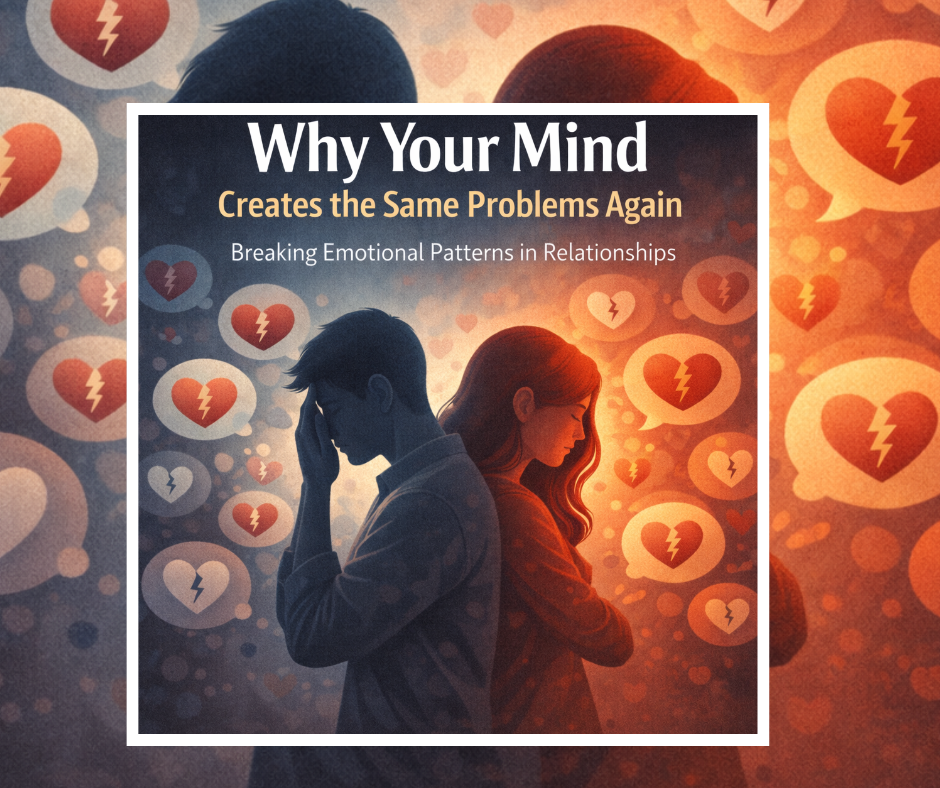
Why Your Mind Creates the Same Problems Again is often misunderstood. Most people believe repeating problems happen because of bad luck or difficult people. However, this idea misses the real cause. The truth is much deeper and also more empowering. These issues return not because life is unfair but because the mind quietly repeats familiar patterns. Once this becomes clear, the cycle can finally start to break.
1. Introduction Why Do Problems Keep Repeating in Life
1.1 A Relatable Look at Repeating Problems in Life
At some point many people notice the same struggles showing up again and again. For example it might be the same relationship conflicts or the same emotional stress or even the same career blocks. Even though the situation looks new the feeling underneath feels very familiar.
Because of this many people ask why problems keep repeating in my life. They feel stuck and confused. Despite trying harder the outcome does not change. This is usually the moment when frustration grows and motivation drops.
1.1.1 Why Life Feels Stuck on Repeat
What makes this experience more painful is the sense of effort without progress. You may change jobs or move to a new place yet the same emotional patterns follow. As a result it feels like life itself is not moving forward.
This happens because repeating problems in life are often driven by internal patterns not external events. Until the inner pattern changes the outer situation keeps reshaping itself in familiar ways.
1.2 The Core Idea Behind Mental Repetition
At the heart of this issue is one simple truth. Your mind plays a bigger role than you think. In fact why your mind creates the same problems again has everything to do with how it learns and protects you.
The mind stores past experiences and builds shortcuts. Over time these shortcuts turn into repeating mental patterns. Even when a pattern causes pain the mind still uses it because it feels known and predictable.
1.2.1 How the Mind Quietly Guides Outcomes
Instead of reacting to the present moment the mind often reacts to memory. Because of that unconscious behavior patterns start guiding decisions. You may think you are choosing freely but many choices come from habit.
This is why the same situations keep happening even when you want change. The mind is repeating what it already knows.
1.3 What You Will Learn in This Guide
This guide is not about blame or guilt. Instead it is about awareness. You will learn how mental repetition works and why the mind gets stuck in loops.
More importantly you will begin to understand how to break repeating mental patterns without force. By the end you will see your struggles differently and that alone creates space for change.
2. How the Mind Works Behind the Scenes
2.1 Why the Brain Loves Familiarity Over Change
The brain is designed to keep you safe not to make you happy. Because of that it prefers familiarity over uncertainty. Even familiar pain feels safer than unknown change.
This explains why the mind repeating patterns feels automatic. The brain sticks to what it knows because it requires less energy and less risk.
2.1.1 Comfort Zones and Mental Loops
A comfort zone is not always comfortable. Often it is just familiar. The brain builds habit loops that repeat thoughts emotions and reactions.
As time passes these loops become mental conditioning. Without awareness the mind keeps choosing the same responses which leads to repeating problems in life.
2.2 Subconscious Mind Patterns That Control Behavior
Most daily decisions do not come from conscious thinking. They come from the subconscious mind. Subconscious beliefs formed long ago still influence behavior today.
Because of this subconscious mind patterns quietly shape relationships reactions and choices. Even when logic says change the subconscious pulls you back to the familiar.
2.2.1 Mental Programming and Limiting Beliefs
Mental programming starts early through experiences and emotional conditioning. Over time these experiences form limiting beliefs like expecting rejection or fearing failure.
As a result the mind creates repeated struggles without intention. The pattern continues because it feels normal.
2.3 Why Change Feels Hard Even When Pain Repeats
One confusing part is knowing something hurts yet still repeating it. This happens because fear based thinking is stronger than logic.
Change feels risky to the brain. Even when pain repeats the mind believes it can handle known pain better than unknown outcomes.
2.3.1 Emotional Conditioning and Resistance to Change
Emotional memory plays a major role here. Past emotions get stored and reused during similar situations.
That is why the mind stuck in same issues reacts before you can think. Until this conditioning is noticed the cycle continues.
Many people believe repeating problems happen because they are weak careless or unlucky. However this belief is misleading. The real cause sits deeper than willpower. Understanding the psychology behind repetition explains why the same problems return even when effort is sincere.
3. The Psychology Behind Repeating Problems
3.1 Psychology of Repetition Explained Simply
At a basic level the mind learns through repetition. When something happens often the brain labels it as important. Because of this it builds patterns to respond quickly next time. This is a survival function not a flaw.
In behavioral psychology this is called pattern learning. The brain connects actions with outcomes and stores them. Over time these stored responses become automatic. As a result repeating problems in life are often learned responses playing out again.
3.1.1 How the Brain Reinforces Familiar Outcomes
Each time a reaction feels familiar the brain strengthens that path. Even when the outcome is negative the mind sees familiarity as safety. Therefore the psychology of repetition keeps the loop alive.
This explains why your mind creates the same problems again without intention. The brain is simply replaying what it knows works to protect you emotionally.
3.2 Why People Repeat Mistakes Again and Again
Many people think repeating mistakes means they did not learn the lesson. In reality the lesson may never reach awareness. Instead unconscious behavior patterns run the show.
Because the subconscious controls most reactions choices feel logical in the moment. Later regret appears. Then the same cycle repeats. This is why people repeat mistakes again and again even when they promise themselves to stop.
3.2.1 Unconscious Behavior Patterns at Work
Unconscious patterns form from past experiences emotions and beliefs. These patterns guide actions quietly. Since they work below awareness they rarely get questioned.
As a result the same decisions feel natural. Over time this creates repeating failures and repeated struggles that look like fate but are actually habit driven.
3.3 Emotional Memory and Past Experiences
Emotional memory is stronger than logical memory. When an experience carries strong emotion the brain stores it deeply. Later similar situations activate the same feeling instantly.
Because of this emotional memory keeps problems alive. The reaction happens before thinking begins. That is why thought repetition follows emotion not logic.
3.3.1 How Emotional Memory Shapes Present Behavior
Past emotional pain teaches the mind what to expect. Then the mind prepares for that pain even when the present moment is different.
This is why the past keeps repeating in new forms. The memory acts like a filter shaping perception and reaction.
4. Emotional Triggers That Restart the Same Issues
4.1 What Emotional Triggers Really Are
An emotional trigger is anything that activates a stored emotional response. It can be a word tone look or situation. Triggers are not signs of weakness. They are signals of stored memory.
In everyday terms a trigger presses an emotional button. Suddenly the body reacts before the mind understands why. This is how repeating emotional pain begins again.
4.1.1 Why Triggers Feel Instant and Overwhelming
Triggers bypass conscious thinking. The brain jumps straight to protection mode. Because of that reactions feel sudden and intense.
This explains why the mind stuck in same issues reacts automatically during stress.
4.2 How Past Emotional Pain Controls Reactions
When pain was never processed the mind keeps it active. Later similar moments awaken that pain. The reaction feels justified even when the situation is small.
Because of this subconscious reactions repeat old defenses. Anger withdrawal fear or control appear without choice.
4.2.1 Subconscious Reactions and Emotional Conditioning
Emotional conditioning teaches the mind how to respond. Over time the response becomes automatic.
This is how repeating emotional pain continues even when circumstances change.
4.3 Why Same Situations Keep Happening
Under stress the brain returns to familiar responses. Logic weakens and habit strengthens. Therefore the same situations keep happening when pressure appears.
Stress acts like a switch that activates old mental loops. Until awareness grows the cycle restarts again and again.
4.3.1 Stress and the Return to Old Patterns
Stress reduces conscious control. Then unconscious patterns take over.
That is why problems repeat during difficult moments. The mind chooses what feels known not what feels new.
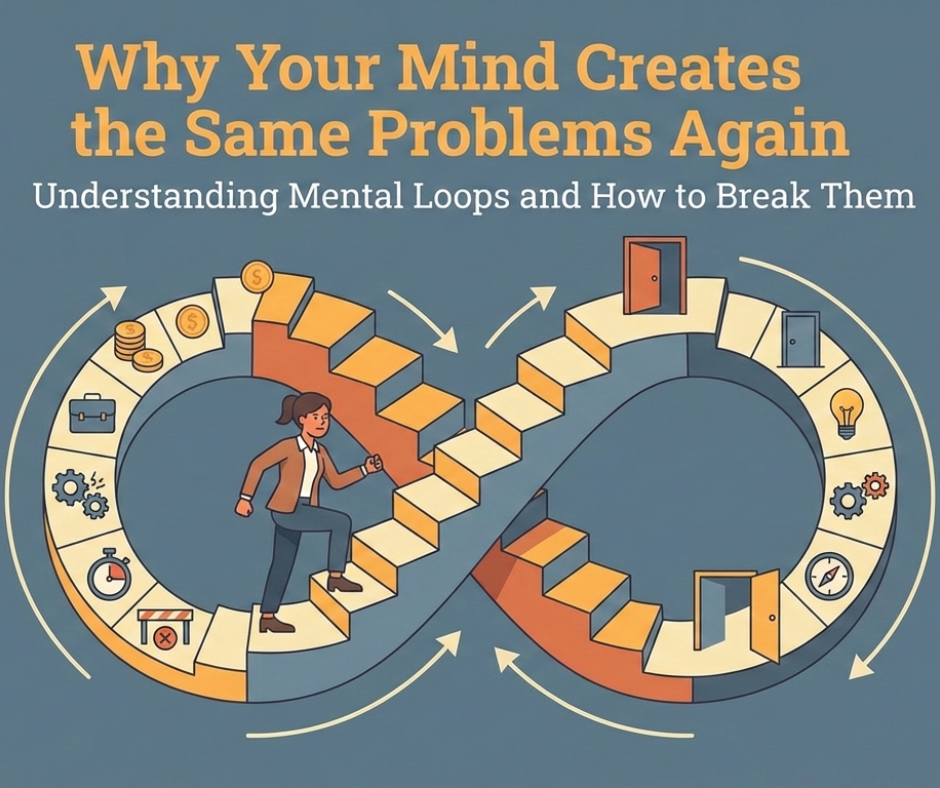
A common assumption is that repeating problems only come from emotions or past wounds. That idea sounds logical but it is incomplete. Even when emotions settle the same issues still return. This happens because thought patterns and habits work quietly in the background. That hidden activity explains why problems repeat even when you feel calm and aware.
5. Thought Patterns That Quietly Create the Same Problems
5.1 Negative Thinking Cycles and Thought Repetition
Thoughts do not appear by accident. The mind repeats what it practices most often. When the same thought shows up daily it slowly becomes a mental habit. Over time this habit feels natural and unquestionable.
Because of this negative thinking cycles play a big role in why your mind creates the same problems again. When the mind expects trouble it filters reality through that expectation. As a result thought repetition slowly turns into repeating problems in life.
5.1.1 How Repeated Thoughts Shape Reality
Each repeated thought strengthens a mental path. The brain treats it like a familiar route. Eventually actions follow that route without awareness.
This is one major reason the mind stuck in same issues keeps recreating similar outcomes even when circumstances change.
5.2 Limiting Beliefs That Guide Choices
Beliefs act like silent instructions. They decide what feels safe and what feels risky. Most limiting beliefs form early and operate quietly.
Because of this beliefs guide choices behind the scenes. If someone believes effort never pays off their actions reflect hesitation. This pattern explains why problems repeat again and again despite motivation.
5.2.1 How Beliefs Create Repeating Problems in Life
Limiting beliefs shape reactions and decisions. Then life responds to those decisions.
This cycle makes it look like fate when in reality belief driven behavior is at work.
5.3 How Expectations Create Familiar Outcomes
Expectations prepare the mind for a specific result. When the mind expects failure it behaves cautiously. When it expects rejection it pulls back.
As a result familiar outcomes appear again. This explains why problems repeat even in new environments.
5.3.1 Why the Mind Prefers Familiar Results
Familiar results feel predictable to the brain. Even disappointment feels safer than uncertainty.
That preference keeps the cycle active and explains why your mind creates the same problems again.
6. Habit Loops and Self Sabotage Patterns
6.1 How Habit Loops Form in the Brain
Habits form through repetition not decision. When an action reduces discomfort even briefly the brain records it.
Over time this creates habit loops. A trigger leads to a response followed by a familiar result. This process runs automatically.
6.1.1 Habit Formation Explained Simply
The brain looks for efficiency. Habits save effort and energy. Once formed they run without thought.
This is why mind repeating patterns feel effortless even when they cause repeating failures.
6.2 Self Sabotage Patterns That Block Progress
Self sabotage is not laziness. It is protection. When growth feels unfamiliar the mind slows progress.
This creates mental blocks and repeating problems in life. Forward movement starts then stops.
6.2.1 Why Self Sabotage Feels Automatic
Self sabotage feels out of control because it is tied to habit loops. The reaction happens before logic steps in.
That is why people feel stuck repeating the same mistakes.
6.3 Why the Mind Creates Same Problems Through Habits
Habits reinforce thoughts beliefs and emotions. Together they lock the pattern.
Because of this the mind creates same problems without conscious intent. The loop continues until awareness appears.
6.3.1 Awareness Is the Exit Point
Noticing the habit weakens its grip. Awareness interrupts repetition.
Once seen clearly the pattern begins to loosen.
A popular belief is that life repeats the same lessons to punish you or test your patience. That idea sounds dramatic but it misses the point. Life is not working against you. The repetition happens because the mind has not fully noticed the pattern yet. Once awareness grows the lesson no longer needs to repeat.
7. Why Life Keeps Teaching the Same Lessons
7.1 Why Life Lessons Repeat Until Awareness Grows
Life works like a mirror. It reflects what the mind is ready to see. When awareness is low the same situations return in different forms. This is why life keeps teaching the same lessons even when you change places roles or people.
Instead of asking why this keeps happening it helps to ask what this situation is trying to show me. That shift opens the door to awareness. Without awareness the mind keeps recreating similar experiences.
7.1.1 Lessons Are Signals Not Punishments
Each repeated lesson is a signal pointing to a pattern. The lesson stays active until the pattern becomes clear.
Once the message is understood repetition slowly loses its purpose.
7.2 How Ignoring Patterns Strengthens Them
When patterns are ignored they grow stronger. The mind assumes the behavior is working because it keeps repeating. Over time the pattern becomes automatic.
This explains why problems do not change even when effort increases. Action without awareness often repeats the same loop.
7.2.1 Avoidance Keeps the Cycle Alive
Avoiding discomfort delays insight. The mind then returns to familiar responses.
As a result repeating problems in life feel permanent even though they are not.
7.3 Awareness as the Turning Point
Awareness changes how the mind responds. When a pattern is seen clearly it loses its control.
Growth begins the moment you notice without judgment. That moment creates choice. Choice creates change.
7.3.1 Growth Breaks Repetition
Personal growth is not about fixing yourself. It is about seeing clearly.
When awareness rises the lesson no longer needs to repeat.
8. Signs Your Mind Is Repeating Patterns Without You Noticing
8.1 Same Conflicts Showing Up in Different Forms
One clear sign is familiar conflict. The faces change but the situation feels the same. Arguments repeat with different people.
This points to repeating life challenges driven by internal patterns rather than external events.
8.1.1 Different Scenes Same Story
The details shift but the emotional theme stays consistent.
That consistency reveals a repeating mental loop.
8.2 Same Emotional Reactions in New Situations
Another sign is reacting the same way in new moments. Small events trigger big emotions.
This happens due to emotional conditioning. The mind responds based on past learning not present reality.
8.2.1 Conditioned Reactions Feel Automatic
Emotions rise before thought. The reaction feels justified.
Later reflection shows the response was familiar rather than necessary.
8.3 Same Results Despite New Efforts
Trying harder but getting the same result is a strong indicator. New strategies still lead to old outcomes.
This explains why the past keeps repeating even when intentions are good.
8.3.1 Effort Without Awareness Repeats History
Effort alone does not change patterns. Awareness guides effort in a new direction.
Once awareness enters the loop results begin to shift.
If you want to learn more about how to break repeating mental patterns and transform your life, feel free to reach out. Visit our website MindPowerArtists.com or Reach out to us directly for guidance, tips, and personalized support. We’re here to help you take control of your mind and create lasting positive change.
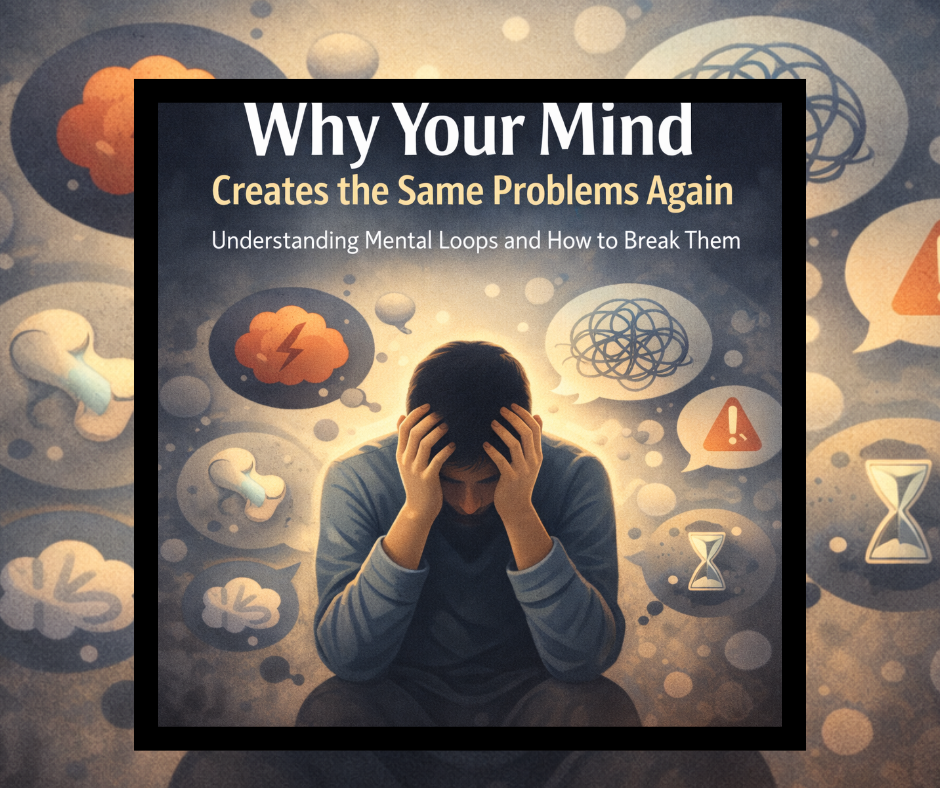
Many people think breaking repeating problems requires sheer willpower or forcing change. That idea makes it feel like failure is personal. In reality the solution is not about trying harder. It’s about seeing clearly how your mind repeats patterns and learning to guide it consciously.
9. How to Break Repeating Mental Patterns
9.1 Building Mind Patterns Awareness
Awareness is the first step to change. The mind often operates on autopilot, following habitual thoughts and reactions. Self awareness psychology shows that noticing these patterns interrupts them. Simply observing without judgment creates space to respond differently.
When you track your thoughts and emotions you start to see recurring loops. This is why mind patterns awareness is essential for breaking repeating problems in life.
9.1.1 Tools to Increase Awareness
Simple practices like journaling, pausing before reacting, and reflecting on triggers help you identify recurring patterns. The key is consistency, not perfection.
9.2 How to Stop Repeating the Same Mistakes
Stopping repetition is not about punishing yourself for past behavior. Instead, it’s about understanding why the mistake happens. By seeing the connection between thought, emotion, and reaction, you can interrupt the cycle before it repeats.
Long tail keyword how to stop repeating the same mistakes comes into play here. When you notice the early signs of a familiar pattern, you can make a conscious choice to respond differently, creating a new outcome.
9.2.1 Recognizing the Early Signs
Look for small triggers, repeated thoughts, or habitual reactions that usually lead to unwanted outcomes. The moment you recognize these signs, you can take proactive steps to redirect behavior.
9.3 How to Break Repeating Mental Patterns Step by Step
Breaking mental loops requires structured steps. First, identify the pattern. Second, explore the underlying belief or emotion. Third, choose a new action to replace the automatic response. Finally, reinforce the new action through repetition and reflection.
Using long tail how to break repeating mental patterns, this process helps you take control of your mind instead of letting habits run unchecked. Over time, these conscious choices reduce the automatic repetition that causes recurring problems.
10. How Awareness Changes Everything
10.1 From Autopilot to Conscious Choice
Most people live on autopilot, reacting without noticing. Awareness shifts the brain from automatic response to deliberate action. When the mind is aware, repetition loses its grip because you can choose your reaction instead of letting old patterns dictate it.
10.1.1 Mental Repetition vs Awareness
Mental repetition is unconscious and effortless. Awareness is deliberate and effortful at first. The difference is control. Awareness gives you the power to interrupt loops before they become repeated problems in life.
10.2 Why Awareness Weakens Old Patterns
Awareness works like a spotlight, exposing habits that run in the background. Once a pattern is seen clearly, it loses its automatic power. The mind begins to form new neural pathways, replacing outdated loops with more adaptive responses.
10.2.1 Repetition Loses Its Hold
Repeated problems only persist because they are unnoticed. Awareness brings them into the light, making them easier to manage and change.
10.3 Creating Space for New Responses
When awareness interrupts an old habit, it opens space for choice. This is where emotional regulation comes in. Instead of reacting with old fear or anger, you can respond thoughtfully. You create new behaviors that align with your goals and values.
10.3.1 Emotional Regulation in Action
Practices like mindful breathing, pausing before responding, and reflecting on triggers allow the mind to respond intentionally. Over time, this reduces the power of old patterns and strengthens conscious decision-making.
It’s easy to assume that stopping repeated problems requires drastic changes or forcing yourself to behave differently. That’s actually a misconception. Real change comes from small consistent practices that gently retrain the mind. By observing patterns, adjusting thoughts, and creating new habits, you can prevent the same issues from coming back, making growth feel natural and manageable.
11. Simple Daily Practices to Stop Repeating Problems
11.1 Observing Thoughts Without Judgment
The first step is noticing your thoughts. Thought patterns psychology shows that simply observing thoughts without labeling them good or bad helps break automatic loops. When you pause and watch thoughts as they arise, the mind starts separating from habitual reactions.
11.1.1 How to Practice Observation
Take short moments during the day to notice what your mind is thinking. Journaling, mindful breathing, or just silently reflecting works. The goal is awareness, not analysis. Over time, you see recurring thought patterns and understand what drives repeated problems in life.
11.2 Rewriting Subconscious Beliefs
Next, it’s important to address subconscious programming. Long tail how subconscious mind repeats patterns explains that many recurring issues are rooted in beliefs you aren’t even aware of. When these beliefs are challenged or rewritten, automatic responses start changing.
11.2.1 Techniques to Rewire Beliefs
Affirmations, visualization, and conscious reflection on limiting beliefs help the mind form new neural pathways. Repetition matters. The more you practice replacing old beliefs with empowering ones, the fewer automatic problems reappear.
11.3 Creating New Habits That Stick
Finally, changing habit loops is essential. Habits form when actions are repeated in response to triggers. By creating new habits consciously, you replace old loops that caused repeating problems.
11.3.1 Building Lasting Change
Start small. Pick one action, repeat it daily, and reward consistency. Over time, the brain recognizes it as a reliable pattern. This process slowly overrides old habits, helping the mind stop recreating familiar problems.
12. Final Thoughts Why Your Mind Creates the Same Problems Again
12.1 The Real Reason Problems Repeat
The main reason your mind creates the same problems again is that it follows familiar thought patterns, beliefs, and habits. The mind prefers the known, even if it causes pain. Recognizing this truth is empowering because it shows the solution lies in awareness and conscious choice.
12.2 Growth Begins With Noticing, Not Fighting
Progress starts the moment you notice the loop instead of resisting it. Calm reflection allows the mind to step out of autopilot. Fighting or blaming yourself only strengthens old patterns, while awareness creates space for change.
12.3 Moving Forward Without Repeating the Past
When you apply simple daily practices like observing thoughts, rewriting beliefs, and building new habits, old loops gradually lose their power. The mind begins responding consciously. Over time, you move forward with clarity and confidence, leaving behind the cycle of repeating problems.